Law, Ethics, and Academic Integrity in the Age of Artificial Intelligence
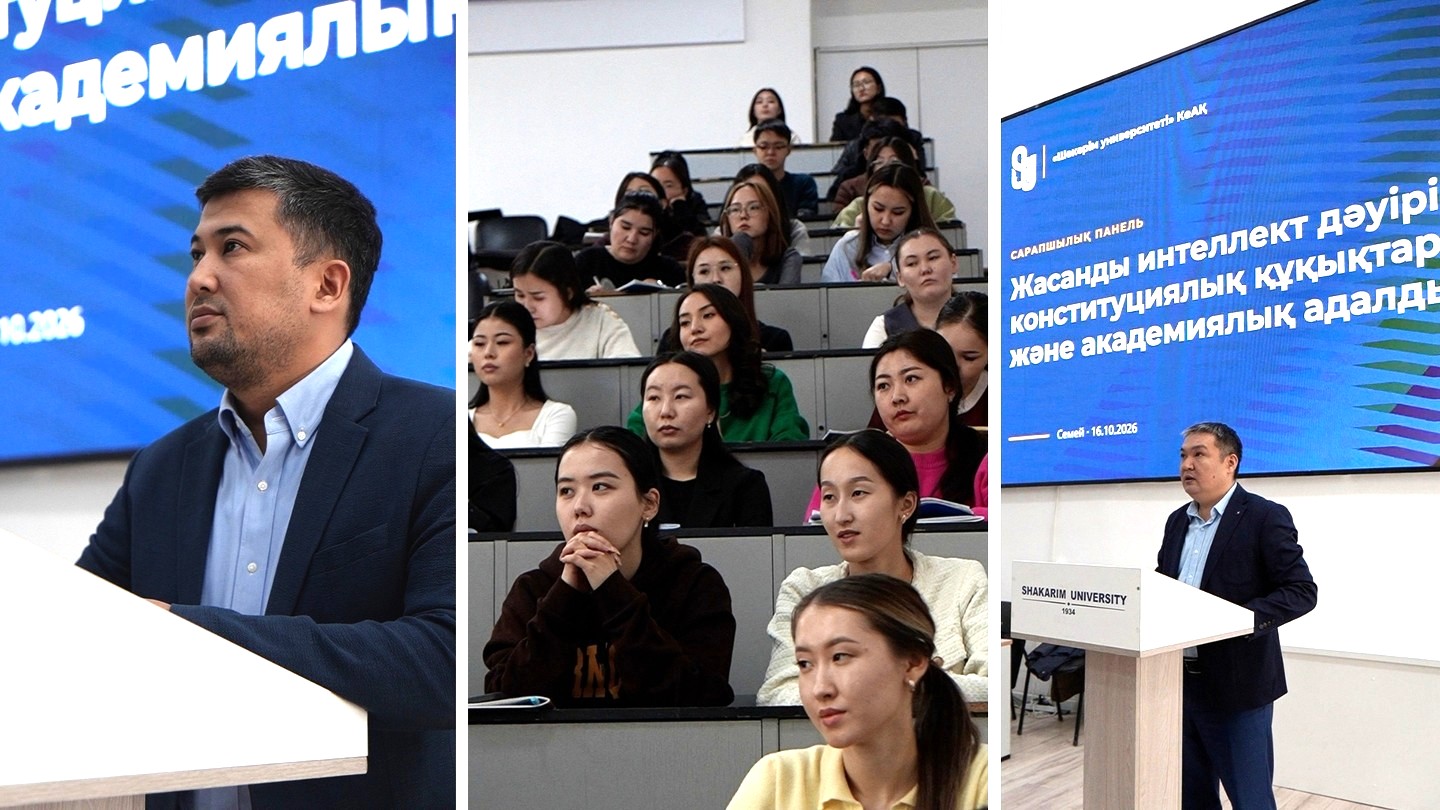
An expert panel on "Constitutional rights, ethics and academic integrity in the era of artificial intelligence" was held for undergraduates of Shakarim University. The event was aimed at improving the legal literacy of graduate students, forming a culture of responsible use of artificial intelligence, and strengthening the principles of academic integrity in research activities.
During the panel, the protection of human rights in the digital era, copyright protection, privacy of personal data, the authenticity of scientific works, and the ethical limits of using artificial intelligence were discussed. focused on the possibilities of the ongoing AI-Sana program. He introduced ways to effectively use artificial intelligence agents as an auxiliary tool in educational and research processes.
Today, 12 artificial intelligence agents have been developed and are working with the participation of university students. These initiatives allow students to develop their digital competencies, streamline daily tasks, and gain hands-on experience with new technologies. At the same time, it is important to take into account their capabilities and limitations when using AI tools and check the correctness of the received information.
Head of the Communication Center Mukhtar Abdikakimov spoke about the work being done within the framework of this year's Digitization Year and explained the internal rules and basic requirements for the use of artificial intelligence at the university. In particular, the possibilities of using AI tools, restrictions on their use and issues of responsibility in the digital environment were discussed.
The speaker noted that the introduction of new technologies in education and scientific activities, in addition to increasing their effectiveness, also requires compliance with the requirements of academic integrity.
The expert panel also paid special attention to the issue of distinguishing between using the capabilities of artificial intelligence and appropriating the work of others. Presenting another author's text or idea as one's own work without crediting the source is against the principles of academic integrity. Therefore, graduate students should refer to the sources used in the preparation of scientific work, critically check the materials obtained with the help of artificial intelligence, and respond to the authenticity of the research results.
It is also important to be careful when processing personal data. In particular, the introduction of personal data, service or confidential information of third parties into open artificial intelligence systems without an appropriate legal basis can threaten information security and privacy.
The Constitution of the Republic of Kazakhstan guarantees the right to privacy and protection of personal data from illegal collection, processing, storage and use, including through digital technologies. These requirements are also important when using artificial intelligence.
In addition to mastering artificial intelligence, the expert panel showed the importance of using it in compliance with ethical and legal requirements. Because no matter how much technology advances, the basis of quality education and reliable science is academic integrity, critical thinking and human responsibility.