Academic Integrity
Sections

Who I am
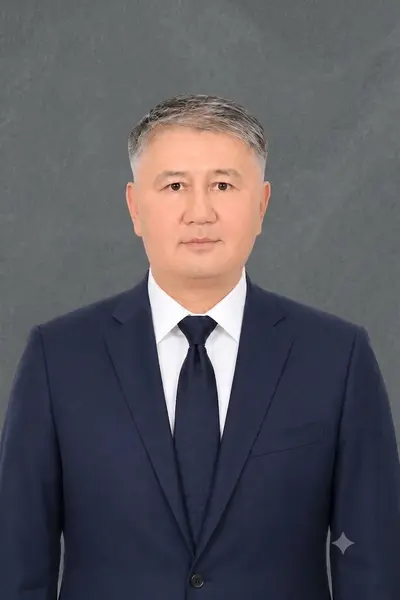
Kasenov Dastan Dauletovich
Compliance Officer
Core responsibilities
The Compliance Officer is an employee of the Company who is not a member of the Board of Directors or the Management Board, and is appointed by the Board of Directors. In their work they report and are accountable to the Board of Directors of the Company.
The Compliance Officer acts in accordance with the laws of the Republic of Kazakhstan, the Charter, the Code, this Regulation, other internal documents of the Company, and the decisions of the Board of Directors and the Sole Shareholder.
Office hours. Faculty, staff and students are received on matters of legal compliance and prevention of violations: Monday to Friday, 9:00–18:00.
Academic integrity

Compliance and academic integrity
Compliance means following laws and internal rules, preventing risks, and building a culture in which integrity becomes the norm.
Compliance
Following the laws of Kazakhstan and the university’s internal documents: the charter, policies and code of ethics.
Prevention
Identifying and reducing corruption and other risks before they materialise.
Culture
An environment where integrity is treated as the norm, not as an imposed requirement.
Why this is a matter of governance
Every grade is a management decision. A chain of such decisions shapes the university’s reputation and the trust placed in it.
| Assessment | Every academic grade is a management decision, not a formality. |
| Decision | It determines the path of a particular person. |
| Opportunity | Whether the opportunity goes to the person who earned it depends on how objective the decision is. |
| Reputation | The sum of decisions shapes reputation among applicants, employers and partners. |
| Trust | Reputation becomes trust only when it is confirmed in practice. |
What academic integrity covers
It is not only plagiarism and cheating. Distinguishing the main types of misconduct helps both prevention and the review of specific cases.
| 01 | Plagiarism: using someone else’s ideas or text without attribution |
| 02 | Cheating: unauthorised sources during an assessment |
| 03 | Fabrication: data or results that never existed |
| 04 | Falsification: distorting real data or results |
| 05 | Contract cheating: presenting someone else’s work as one’s own |
| 06 | Unauthorised collaboration: working together where independent work is required |
This also includes unfair assessment, conflicts of interest and corrupt practices — not only student discipline, but the ethics of everyone at the university.
Six values and who is accountable for them
Honesty
Alignment of words and actions, and refusal of deception in any form.
Trust
Without it, a grade, a review and a recommendation lose their meaning.
Fairness
The same rules and consequences for everyone, regardless of status.
Respect
Recognition of other people’s work and of the right to an impartial review.
Responsibility
Willingness to answer for one’s decisions and their consequences for others.
Courage
Willingness to report a violation or admit a mistake, even when it is uncomfortable.
Who is accountable
Students are accountable for the independence of their work, faculty for the fairness of assessment, staff for the correctness of procedures, and leadership for the rules and how they are applied. Together this forms the culture of the university.
Student
Faculty
Staff
Leadership
Where academic dishonesty becomes corruption
A violation becomes a corruption risk not by itself, but when personal gain and abuse of position stand behind it.
| Violation | Cheating, plagiarism and falsification are not, by themselves, corruption. |
| Personal gain | The situation changes when one of the parties has a private interest. |
| Abuse of position | A position is used not to fulfil duties, but to obtain a benefit. |
| Corruption risk | The violation moves beyond ethics and becomes a matter for compliance oversight. |
Risk map by area
Risks are uneven: some areas need closer attention.
Assessment
Inflating or lowering a grade outside the established criteria.
Exams
Leaking questions or assignments, or access to materials in advance.
Admissions
Influencing selection results outside the procedure.
Scholarships
Unfair allocation while the procedure is formally observed.
Procurement
Choosing a supplier for personal interest rather than on the terms.
Hiring
Appointing someone through personal connections instead of a competition.
Research
Misappropriating authorship, manipulating publications and peer review.
Admin. services
Speeding up a procedure in exchange for a benefit.
A “small token of thanks”: is that corruption?
The issue is not the size of the gift, but whether it can influence a decision. If it can, it is no longer just a gift — it is a conflict-of-interest risk.
If you are offered a bribe
| 1 | Refuse immediately and unambiguously. |
| 2 | Do not negotiate the terms. |
| 3 | Do not accept money or any other benefit, even temporarily. |
| 4 | Record the circumstances: date, place, people involved, and the substance of the offer. |
| 5 | Report the situation through the university’s designated channel. |
Do not investigate on your own: that is the task of the authorised body.
Reporting a violation is not “informing”
It works when three conditions are in place:
| 01 | Accessibility: I know where to turn |
| 02 | Safety: I can report a problem in good faith |
| 03 | Fairness: the report is reviewed under the established procedure |
What Shakarim University already does
| 1 | Anti-corruption policy |
| 2 | Compliance Office |
| 3 | Corruption risk assessment |
| 4 | Prevention |
| 5 | Reporting channels |
| 6 | Review and response |
| 7 | Culture of integrity |
Zero tolerance does not mean the absence of a fair procedure. It means corruption must not be treated as acceptable or normal practice.
International experience
Different countries build their own systems, depending on legal tradition. The aim is the same: integrity and trust in the diploma.
🇺🇸 USA
Honor Code: a code of honour that a student accepts as a personal commitment to the community, not as a rule imposed from above. Accountability runs along the chain: student → faculty → university → disciplinary system.
🇬🇧 United Kingdom
The Oxford model emphasises procedural fairness: rule → review → consideration of circumstances → decision → proportionate consequences. A sanction follows only after an impartial examination.
🇰🇷 South Korea
Yonsei University clearly distinguishes types of misconduct: cheating, plagiarism, falsification, unauthorised assistance. Consequences are set for each type separately.
🇨🇳 China
A systemic approach: prevention + education + monitoring + investigation + sanctions. The emphasis is on reducing the likelihood of a violation, not only on reacting after the fact.
🇪🇺 Europe
Most universities rely on institutional codes of ethics and independent academic integrity committees.
What the best practices share
| 01 | Clear rules, known in advance |
| 02 | Prevention, not only reaction |
| 03 | Accessible reporting channels |
| 04 | Impartial review of every case |
| 05 | Proportionate consequences |
| 06 | Analysis of causes and prevention of recurrence |
Artificial intelligence
AI is one tool among others — no more and no less. It can help you learn, and it can also become a means of misconduct.
AI as an assistant
- Explain a topic
- Structure ideas
- Check the language of a paper
- Help prepare for a class
AI as a means of misconduct
- Replacing independent work
- Using it in an exam without permission
- Invented sources
- Falsifying results
TECHNOLOGY DOES NOT CANCEL RESPONSIBILITY
A university people can trust
Clear rules
Requirements are known in advance and stated unambiguously.
Equal conditions
Rules and consequences are the same for everyone, regardless of status.
Transparent procedures
The decision process is understandable and does not depend on private arrangements.
Accessible channels
Everyone knows where to turn with a question or a violation.
Impartial review
Every case is examined on its merits.
Certainty of response
A report of a violation is in fact followed by a response.
| TRUST | It is built when rules and procedures are confirmed in practice, again and again. |
| REPUTATION | The sum of decisions and stories the university accumulates over time. |
| QUALITY OF EDUCATION | A diploma retains its value only when it is backed by real knowledge. |
| A STRONG UNIVERSITY | A university trusted by applicants, employers and partners. |
“Academic integrity is not a limit on what a university can do. It is the foundation on which its quality, reputation and public trust are built.”