The Constitution as a strategy for the future of Kazakhstan
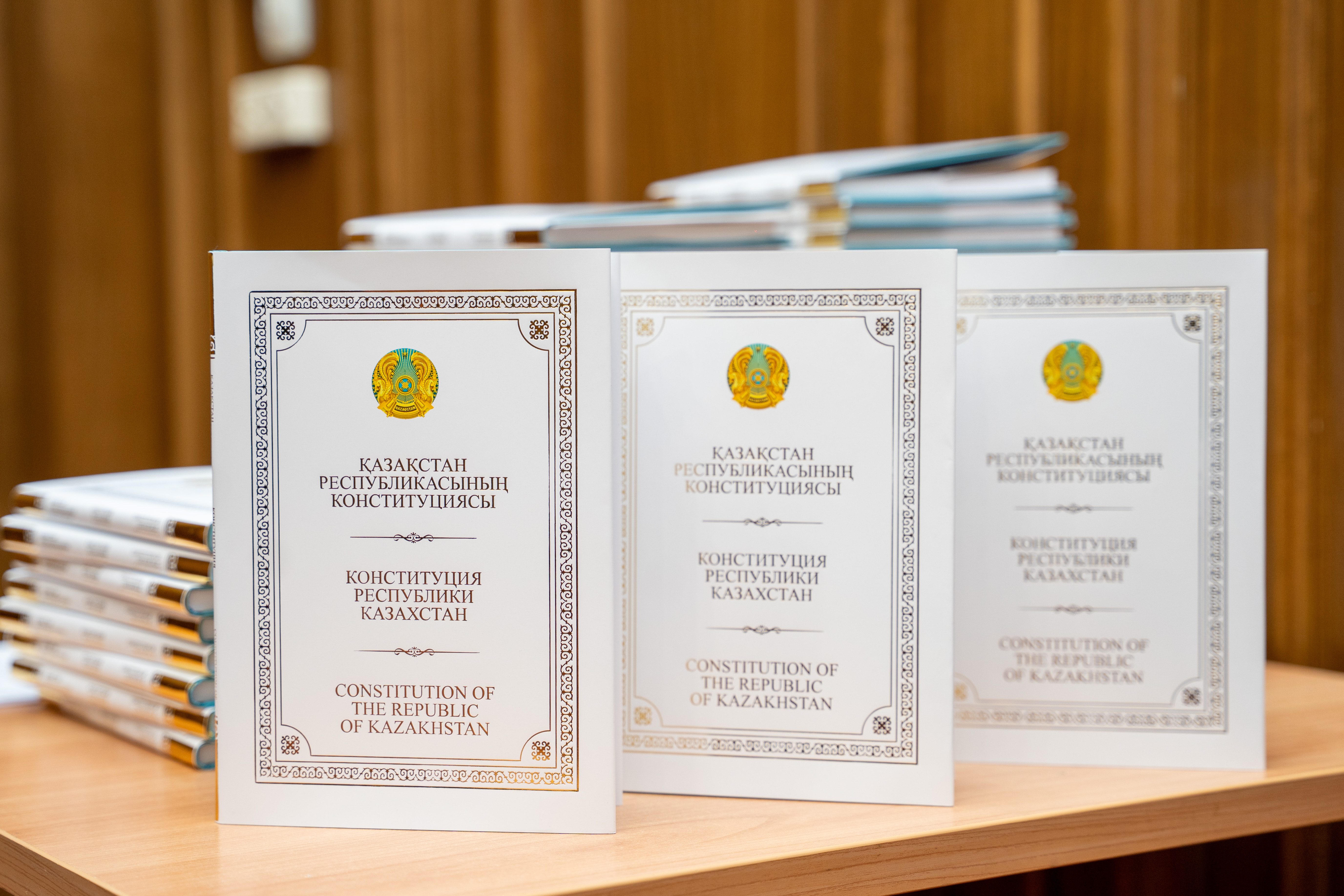
Today, July 1, Kazakhstan entered a new stage of its development.
A new version of the Constitution of the Republic of Kazakhstan has come into force, for which citizens of the country voted in a republican referendum on March 15 of this year. For any state, such events are never limited to changes in legal norms.
The Constitution defines much more. It consolidates the system of values, sets long-term guidelines for development, determines the nature of the relationship between the state and society, and forms the principles by which more than one generation of citizens will live.
Therefore, the meaning of the new Basic Law of our life cannot be considered solely from a legal perspective. In essence, we are talking about a distinctive, new model of the country's development.
Each historical era presents its own demands to the state. If recently the sustainability of the economy was associated primarily with natural resources, industrial potential and an advantageous geographical location, the 21st century shows more and more convincingly: the main factor of competitiveness is the quality of human capital, the ability to create knowledge, develop technologies and quickly introduce them into the economy and public life.
That is why the President of the Republic of Kazakhstan Kassym-Jomart Tokayev consistently speaks not only about political transformations. Issues of Law and Order, justice, strong government institutions, science, education, artificial intelligence, technological independence, regional development and the responsibility of every citizen for the future of the country are increasingly at the center of the state agenda.
All these principles today form a single system.
One of the key ideas of the new Constitution is the affirmation of the principle of Law and Order.
It is very important to understand that this goes much beyond compliance with the law. Law and Order is a new culture of social life. This is respect for a person and his dignity. This is honesty and responsibility when making decisions. This is intolerance towards corruption. This is equality of all before the law. This is the trust of citizens in state institutions and the state in society.
Such an environment becomes the foundation of sustainable development. Where the law applies, investments appear. Where there is justice, entrepreneurship develops. Where society trusts government institutions, education, science and the economy develop faster.
Another thing is no less important.
The new version of the Constitution significantly strengthens the role of education, science, culture and innovation in the development of the country. This is not a random decision. The state actually recognizes intellectual potential as one of the most important national resources. Today, the winners are not those states that produce more minerals. The winners are those that quickly create new knowledge, develop research, introduce technology and prepare people capable of working in the economy of the future.
As a result, issues of education and science cease to be exclusively a sectoral agenda. They become part of the national development strategy.
For universities this means a fundamentally new level of responsibility.
Today it is no longer enough to prepare a good graduate. It is necessary to create a person who is able to think independently, respect the law, make responsible decisions, work honestly, create new technologies, take initiative and understand his responsibility to society.
In fact, the university becomes one of the first institutions where constitutional principles begin to work.
Here for the first time young people learn not only a profession: here their attitude towards the state is formed through law, labor, justice, responsibility.
Therefore, it is the university environment that largely determines what state institutions will be like in ten, twenty, thirty years.
The new Constitution is of particular importance for young people.
Today's schoolchildren, students, young researchers, engineers, doctors, teachers and entrepreneurs will have to live in the Kazakhstan that is beginning to take shape today.
It is they who will have to develop artificial intelligence, create modern production, strengthen the country’s scientific potential, ensure technological independence, preserve cultural heritage and make decisions that determine the further development of the state.
Therefore, respect for the Constitution does not begin with the study of individual articles. It begins with understanding one's own responsibility for the future of the country.
In this sense, it is very symbolic that today in the republican newspapers “Egemen Qazaqstan” and “Kazakhstanskaya Pravda” https://egemen.kz/article/416183-quatty-qazaqstan-%C2%AD%C2%ADquru-mindeti, https://kazpravda.kz/n/konstitutsiya-kak-strategicheskaya-opora-razvitiya-strany/ an article by the Minister of Science and Higher Education of the Republic of Kazakhstan Sayasat Nurbek has been published. The Minister draws attention to an extremely important idea: enshrining education, science and innovation in the new version of the Constitution means their transition from the category of sectoral areas to strategic state priorities. This is not only a high assessment of the role of science, but also a new level of requirements for the entire higher education system.
For us, representatives of the university community, this means, first of all, responsibility for the quality of education, the development of science, the education of the younger generation, and the formation of a research culture.
For the ability to connect fundamental knowledge with the practical needs of the economy and society.
For Shakarim University these principles have a very specific content.
The Abay region is one of those regions where issues of science, education, ecology, agriculture, energy, industry and personnel training are closely intertwined. That is why the university cannot exist separately from the region. Its development is directly related to the development of the territory, and scientific research should work to solve specific problems of the region and country.
The Constitution sets the direction. But its real power is not in the text.
It is manifested in the extent to which its principles become part of the everyday life of the state, society and every person.
This is how constitutional norms turn into state policy, state policy into regional development, and regional development into a strong, fair and competitive Kazakhstan.
Duman Orynbekov,
Rector of Shakarim University