Shakarim Museum: The Return Continues
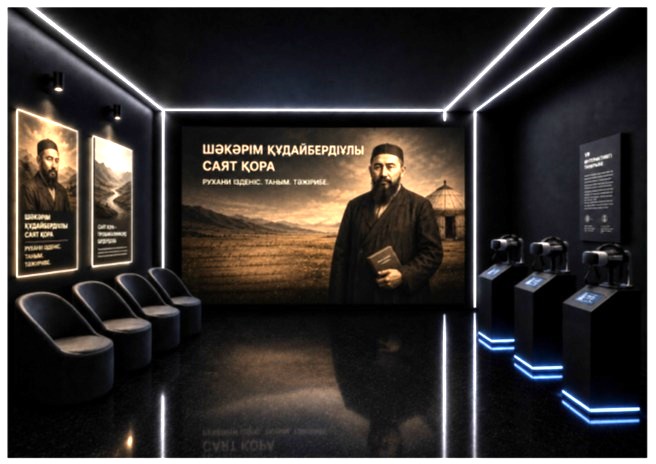
Shakarim University has begun reconstruction of the museum space, which will be entirely dedicated to Shakarim Kudaiberdyuly. Now construction work is underway here: the previous structures have been dismantled, the walls have been opened, and communications are being laid. But behind the usual renovation picture is a project whose significance goes far beyond the renovation of a university facility.
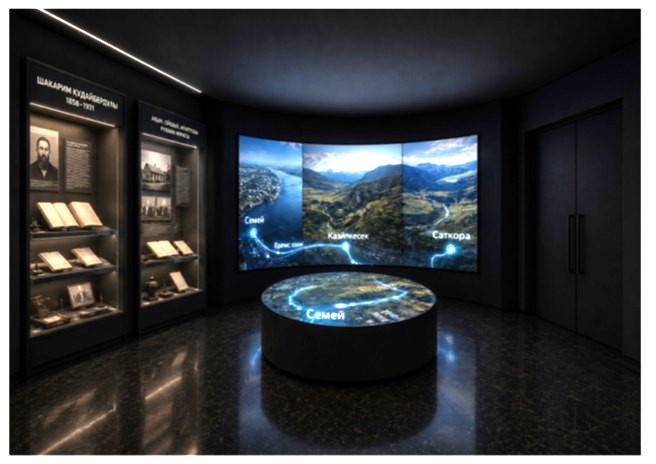
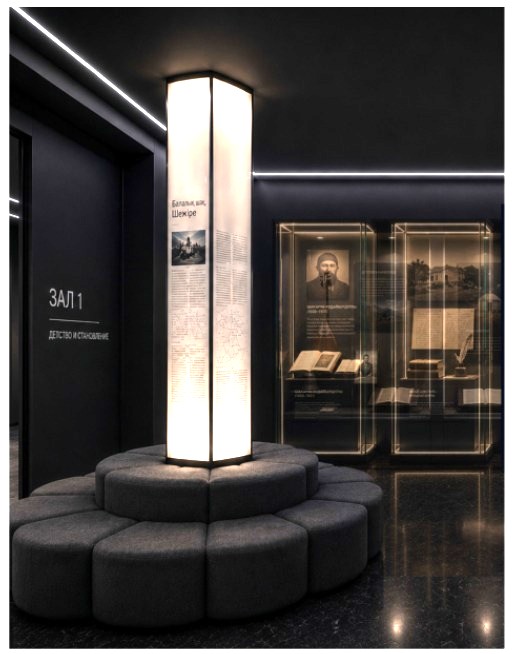
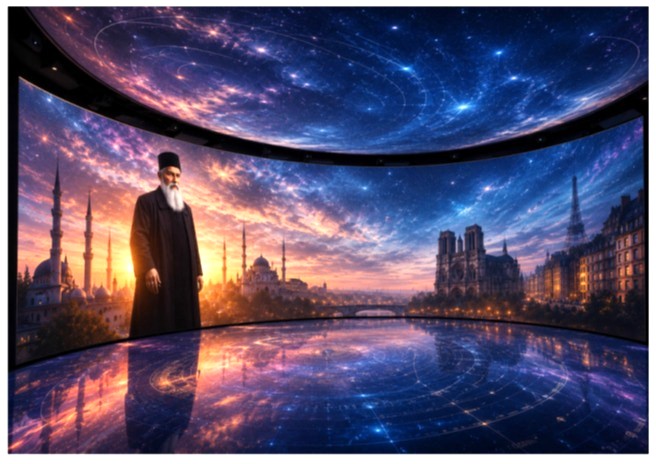
The future museum is conceived as a modern scientific and cultural space with digital exhibitions, multimedia rooms, archival documents, manuscripts, photographs and research materials. The visitor will be able to trace different periods of Shakarim’s life, see places associated with him, refer to works and documents, and immerse himself in the historical environment in which his views were formed.
Two years ago, Shakarim’s personal museum was opened at the University History Museum. The new project was a continuation of this work and at the same time posed another question: if the university has been named after Shakarim Kudaiberdiev since 1993, is a separate exhibition dedicated to a person of such stature sufficient?
Especially here, on the land of Abai, Shakarim, Alash.
It was decided to transfer the entire space to the museum. The history of the university itself, dating back to 1934, photographs of its leaders, archival materials have been preserved and digitized. This made it possible to reconsider the museum concept and focus it on the personality whose name the university has been bearing for more than three decades.
But how should Shakarim appear in a modern museum?
The usual list is known: poet, philosopher, historian, translator, composer, student and nephew of Abai. Behind each of these definitions is a huge layer of heritage. His life itself occurred during one of the most difficult periods in the history of the Kazakh steppe.
Shakarim lived at the turn of the era. He witnessed radical social changes, revolutions, changes in government, and the tragic events of the early twentieth century. His intellectual world developed in close proximity to Abai; his further life coincided with the formation of the Alash movement, changes in national identity and the Kazakh intelligentsia’s search for answers to questions about the future of the people.
Therefore, Shakarim cannot be considered solely within the boundaries of literary history. His works are addressed to philosophy, religion, history, morality, the origin of the Kazakh people, human conscience and responsibility. The deeper researchers turn to his legacy, the more directions open up that require study, comparison of sources and clarification of individual pages of the biography. There is a historical explanation for this.
57 years and more than eight attempts to return one name
The story of Shakarim's return could itself become a separate museum exhibition. After his death in 1931, it took 57 years for the name of the thinker to finally return to the people.
In the article “Zhabaykhan Abdildin. With the right to the truth" in "Kazakhstanskaya Pravda" https://kazpravda.kz/n/zhabayhan-abdildin-s-pravom-na-pravdu/, provides an amazing fact: over the years, more than eight restoration attempts have been made named after Shakarim. Only in 1988 was this process completed!
Behind this figure is the history of several generations of people.
One of those who consistently fought for the return of Shakarim was Kayym Mukhamedkhanov. The scientist’s work on studying the legacy of Abai and his poetic environment was declared a manifestation of bourgeois nationalism. After defending his dissertation “Abai’s Literary School,” Kayym Mukhamedkhanov was arrested and in 1951 sentenced to 25 years on charges of counter-revolutionary activities. After his release, he continued to lecture students about the work of Shakarim and petition for his rehabilitation.
In 1958, hope arose for the restoration of historical justice. Shakarim's guilt in participating in a counter-revolutionary uprising was considered unproven, and the case was dropped. His son Akhat gained access to his father's manuscripts. At the beginning of 1959, “Kazak Adebieti” published Shakarim’s poems and his photograph.
However, a full return did not occur. The publication aroused resistance from ideological bodies, and the thinker’s legacy was once again effectively closed.
In the 1960s, commissions were created to study his life and work. Experts came to the conclusion that it was necessary to return Shakarim to the people, but the decision was not continued. Akhat Shakarimuly and Kaiym Mukhamedkhanov even turned to the First Secretary of the CPSU Central Committee Nikita Khrushchev with a request to facilitate the publication of works. This did not bring any results.
A special page of this story is connected with 1961. Akhat retrieved the remains of his father from the well, where they were located after his death. On August 8 of the same year, Shakarim was reburied next to Abai.
He returned to the land of his ancestors. The country had to wait almost three more decades for the return of his name.
In 1987, Kaiym Mukhamedkhanov again applied to union publications and the Writers' Union of the USSR. A year later, the government commission that considered the issue of rehabilitation was headed by the outstanding Kazakh philosopher, academician Zhabaikhan Abdildin.
As follows from Abdildin’s memoirs, tough ideological polemics continued around the figure of the thinker, and previous accusations were made. The chairman of the commission had to defend the scientists' conclusions to the heads of republican bodies.
And only in 1988 the long-term struggle ended with the restoration of the name of Shakarim!
But historical justice opened the next stage: now it was necessary to return the very legacy of the thinker to society and restore it to its fullest possible extent.
From rehabilitation to research
The following decades brought a huge amount of scientific work. Shakarim's works began to be published, his work was included in school and university curricula, monographs, dissertations, and studies appeared. Streets, institutions, and a university are named after him.
However, 57 years of oblivion have left consequences.
When a historical figure is excluded from the scientific and public space for decades, the natural continuity of the study of his legacy is disrupted. Contemporaries pass away, documents end up in different archives, memories exist in several versions. Some information is widely disseminated, while others remain little known. Later interpretations sometimes begin to be perceived as established facts, although turning to primary sources requires their clarification.
Therefore, modern Shakari studies are faced with the task of restoring the most complete intellectual biography of the thinker.
What is confirmed by documents and what is based on later memories? What pages of his social activities still require research? What is known about Shakarim’s social circle, his connections, and his attitude to the political events that took place? How were his views formed and changed? What sources underlay historical and philosophical works?
Answers require working with archives, manuscripts, primary sources, and comparing already known information with newly discovered materials.
The future Shakarim University Museum is being created in direct connection with this research work. University scientists, together with colleagues from other scientific organizations, are studying the legacy of the thinker, systematizing materials, digitizing his creative heritage and forming the scientific basis of the new exhibition.
Thus, the museum should not consolidate the once formed image of Shakarim, but show it in the context of time and give the visitor the opportunity to turn to sources, documents and the results of modern research.
The location of the museum is of particular importance.
Semey and the Abay region occupy a unique position on the intellectual map of Kazakhstan. Here, the destinies of the people who determined the development of national thought are connected by one historical geography.
Here a whole galaxy of outstanding thinkers, educators and figures of the national movement were formed whose destinies, ideas and heritage cannot be considered as separate historical subjects.
Shakarim grew up in the spiritual environment of Abai. The next generation of Kazakh intelligentsia entered the era of Alash. There were intellectual, human and historical connections between them. Issues that later became national issues were discussed here: the education of the people, cultural independence, attitude towards the state, the moral foundations of society, the place of the Kazakh steppe in a changing world. That is why the President of the Republic of Kazakhstan Kassym-Jomart Tokayev, making the decision to create the Abay region, emphasized the special historical and spiritual significance of this region. Returning the region to its independent status was at the same time an appeal to the enormous intellectual heritage of the land of Abai, Shakarim and Alash, which today remains an important part of national identity.
Semey became one of the centers of this intellectual movement.
Therefore, the museum is able to provide a much broader context than a sequential presentation of the dates of the life of one person. Through the fate of Shakarim one can see the era, the connection of Abai’s legacy with the social searches of the early twentieth century, the Alash movement and the subsequent tragedy of political repression.
It is also important that the museum is not being created in a separate memorial complex, but inside an existing university.
Shakarim University - since 1993.
Over the past decades, the university itself has changed, new generations of students and teachers have grown, new scientific directions, international projects, and digital technologies have emerged.
The name of a thinker in the name of a university implies a special scientific and cultural responsibility.
The university is becoming one of the centers of modern Shakarim studies: it collects and systematizes sources, forms digital archives, supports research, unites scientists of different specialties, involves students and young researchers, and opens Shakarim’s legacy to the international academic community.
In this system, the museum receives not only a memorial, but also a research and educational function.
A historian will be able to turn to archival sources, a philologist - to texts and manuscripts, a philosopher - to Shakarim's system of views. Digital technologies will make it possible to connect documents with geography, manuscripts with transcripts, photographs with historical context, works with the events of the period of their creation.
Multimedia in this concept becomes a way to reveal to the visitor a significantly larger volume of information than a traditional museum stand can accommodate.
For the university, the museum actually becomes an extension of the auditorium and research laboratory.
A museum that doesn’t put an end to it
For now, the future space is difficult to recognize. Repair work is underway, the walls are open, communications are visible, construction and decoration are ahead. The university showed this stage in the next issue of the “Map of Changes” in the Abay region.
After some time, new halls, digital exhibitions, archival documents and manuscripts will appear here. But the value of the future museum will be determined primarily by what kind of work it will allow to continue.
The story of Shakarim's return has already shown how difficult the path to historical truth turned out to be. More than eight attempts, 57 years of waiting, the fates of Kayym Mukhamedkhanov, Akhat Shakarimuly, Zhabaykhan Abdildin and many other people became part of this story.
Now a new generation of researchers faces another task: to study what remains unexplored, verify controversial information from primary sources, compare archives and memoirs, digitize documents, introduce new materials into scientific circulation and reveal Shakarim in all the versatility of his personality - as a poet, philosopher, historian, translator, social thinker and a man of his era.
The new Shakarim University Museum should become one of the permanent centers of this work. Here, in the land of great philosophers, thinkers and educators of the Kazakh steppe, at the university that has been named after Shakarim for more than three decades, his legacy is worthy of continuation in research, new scientific discoveries and the transmission of historical truth to future generations.
It took fifty-seven years to restore the name of Shakarim.
The next task is to reveal his legacy in its entirety.