From Hiroshima to Semey: Shared History and Scientific Lessons
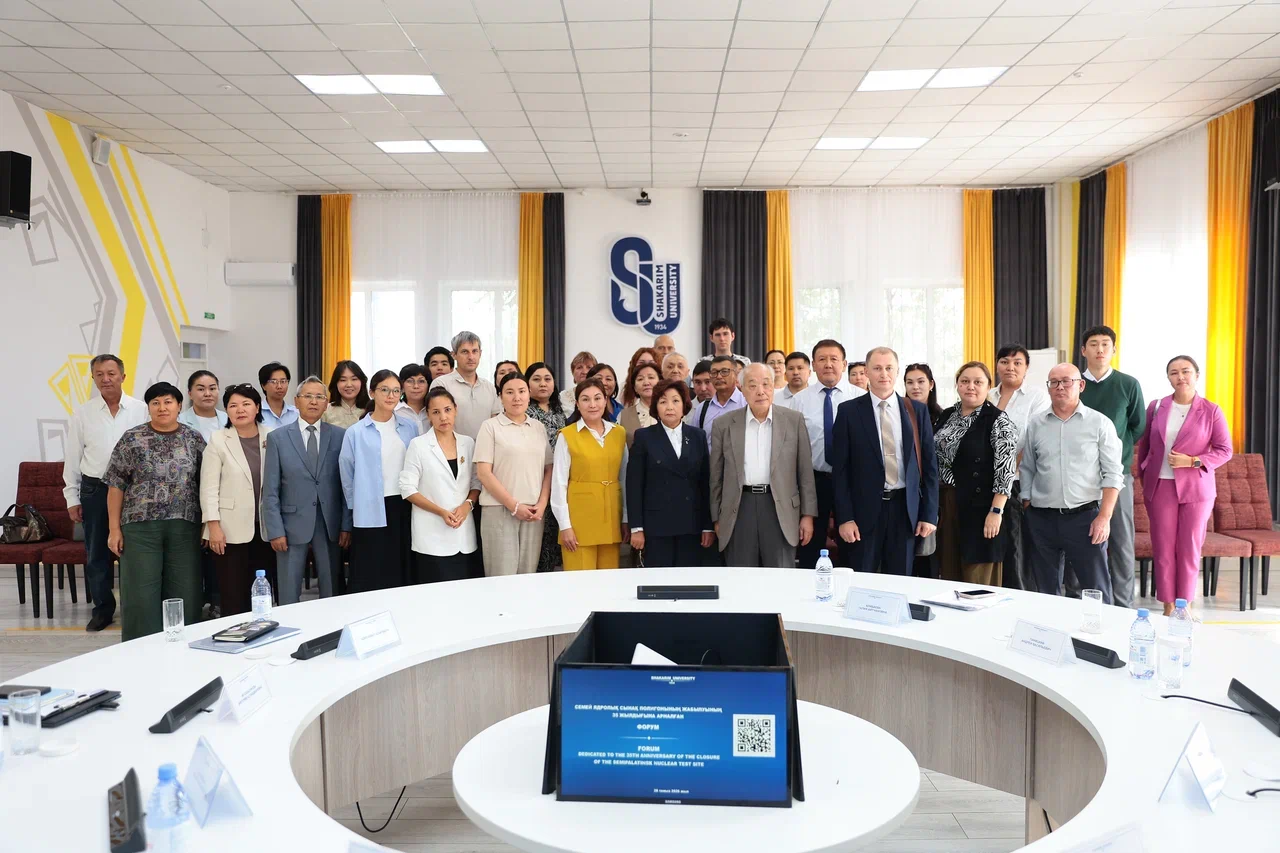
Shakarim University hosted a forum dedicated to the 35th anniversary of the closure of the Semipalatinsk Nuclear Test Site. The event brought together scientists, researchers, and experts in medicine, ecology, veterinary science, and law, as well as representatives of the international scientific community.
The forum began with an exhibition titled "35 Years Since the Closure of the Semipalatinsk Test Site: History, Lessons, Future," which focused on the fates of the affected population and the long-term consequences of nuclear testing. The leitmotif of the event was continuity—from the historic decision to close the test site to modern challenges in nuclear, environmental, and public safety.
Exhibitions were presented by the National Nuclear Center of the Republic of Kazakhstan, JSC "Park of Nuclear Technologies," and the Semey Regional Museum of Local History. Visitors were also invited to view an exhibition of children's drawings titled "Polygon 21: The World Through the Eyes of Children."
Scientists from Shakarim University presented their latest research. PhD I. Karymsakov discussed the creation of an intelligent system based on neural networks designed to analyze oncological diseases in the Semey region and provide treatment recommendations. In turn, PhD M. Satymbekov presented a system for predicting the probability of stochastic and non-stochastic effects in the second and third generations using an information-analytical program.
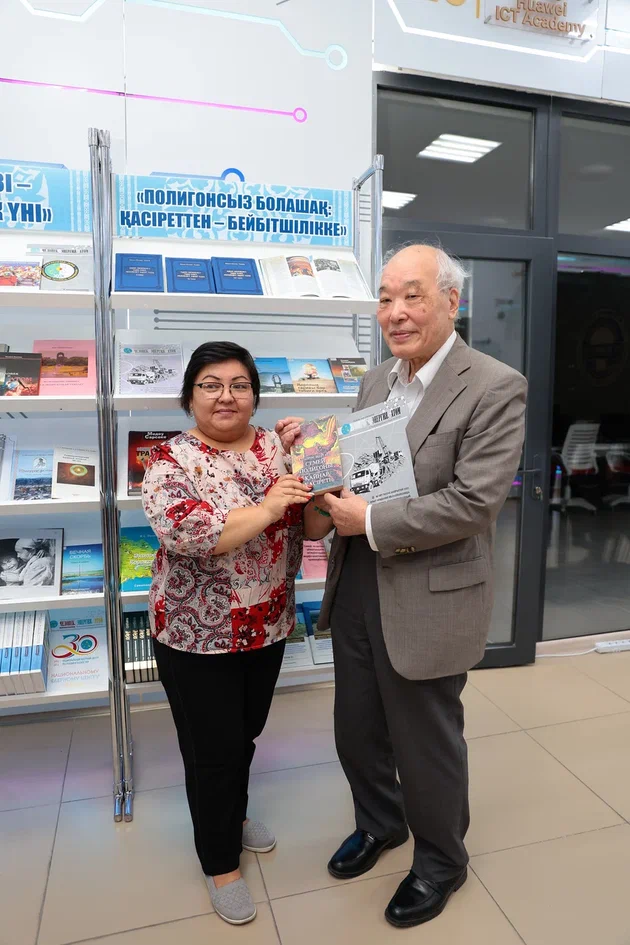
During the forum, Professor Masaharu Hoshi of the Research Institute for Radiation Biology and Medicine at Hiroshima University (Japan) delivered a report titled "The Importance of Studying Radiation Exposure and Its Consequences: From Hiroshima to Semey." He emphasized that the conditions of high-dose, short-term radiation exposure in Hiroshima and Nagasaki cannot be directly equated to the situation at the Semipalatinsk test site, where radiation exposure was low-dose but chronic in nature.
Currently, the professor is collaborating with Kazakhstani researchers to study the impact of radioactive microparticles—radioactive dust lifted into the air during explosions—on the health of the population living in the territory of the former test site.
According to Masaharu Hoshi, previous studies have primarily focused on assessing external radiation doses. At the same time, the intake of radioactive dust and microparticles generated during nuclear tests, as well as their long-term consequences, have not been sufficiently studied. The Japanese scientist noted that years of research in Hiroshima and Nagasaki underscore the importance of accurate radiation dose assessment, and in the case of the Semipalatinsk Test Site, it is essential to specifically study the impact of low-dose radiation and the long-term effects of radioactive microparticles. Therefore, one of his key scientific objectives is a deeper study of the effects of prolonged low-dose radiation on the human body.
Andrey Panitskiy, PhD, Associate Professor and Deputy Director of the Institute of Radiation Safety and Ecology at the National Nuclear Center of the Republic of Kazakhstan (Kurchatov), focused on the work carried out since the closure of the Semipalatinsk Test Site. According to the scientist, the primary tasks included the dismantling of nuclear testing infrastructure, the prevention of the proliferation of nuclear and radioactive materials, and a comprehensive assessment of the radiation and environmental status of the site. Following the facility's closure, radiation surveys were conducted across its territory, alongside systematic efforts to identify and remediate potentially hazardous areas.
The scientist also reported that current research directions cover issues of radioecology and radiation safety. In particular, specialists are studying the patterns of radionuclide distribution and migration in the environment. This work includes research on soil and vegetation cover, aquatic ecosystems (including groundwater), the atmosphere, and human food chains. Furthermore, an important part of the research involves assessing the risks of radiation exposure to human health and wildlife.
As Andrey Panitskiy noted, another area of scientific work is the improvement of methods for assessing the radiation environment. Priority is given to developing and refining analytical research methods, quantifying radiation indicators, and advancing techniques for determining environmental radiation parameters in field conditions.
The forum featured extensive discussions on assessing the health status of the population residing in areas adjacent to the Semipalatinsk Nuclear Test Site, ensuring the quality and safety of livestock products, Kazakhstan's international legal obligations, and other topical issues.
Special attention was also paid to the results of joint scientific research conducted by scholars from Semey Medical University and Shakarim University under targeted funding programs. The empirical data collected during these joint studies have provided a deeper understanding of the potential consequences of radiation exposure, enabling the formulation of evidence-based conclusions and practical recommendations that will serve as a benchmark for future research.