Address by the rector of Shakarim University, Duman Orynbekov, on the occasion of the opening of the first session of the Kurultai of the Republic of Kazakhstan
Dear students, faculty, researchers,
University staff!
Dear parents!
Today, August 28, an event took place whose significance extends far beyond the first meeting of the new legislative body.
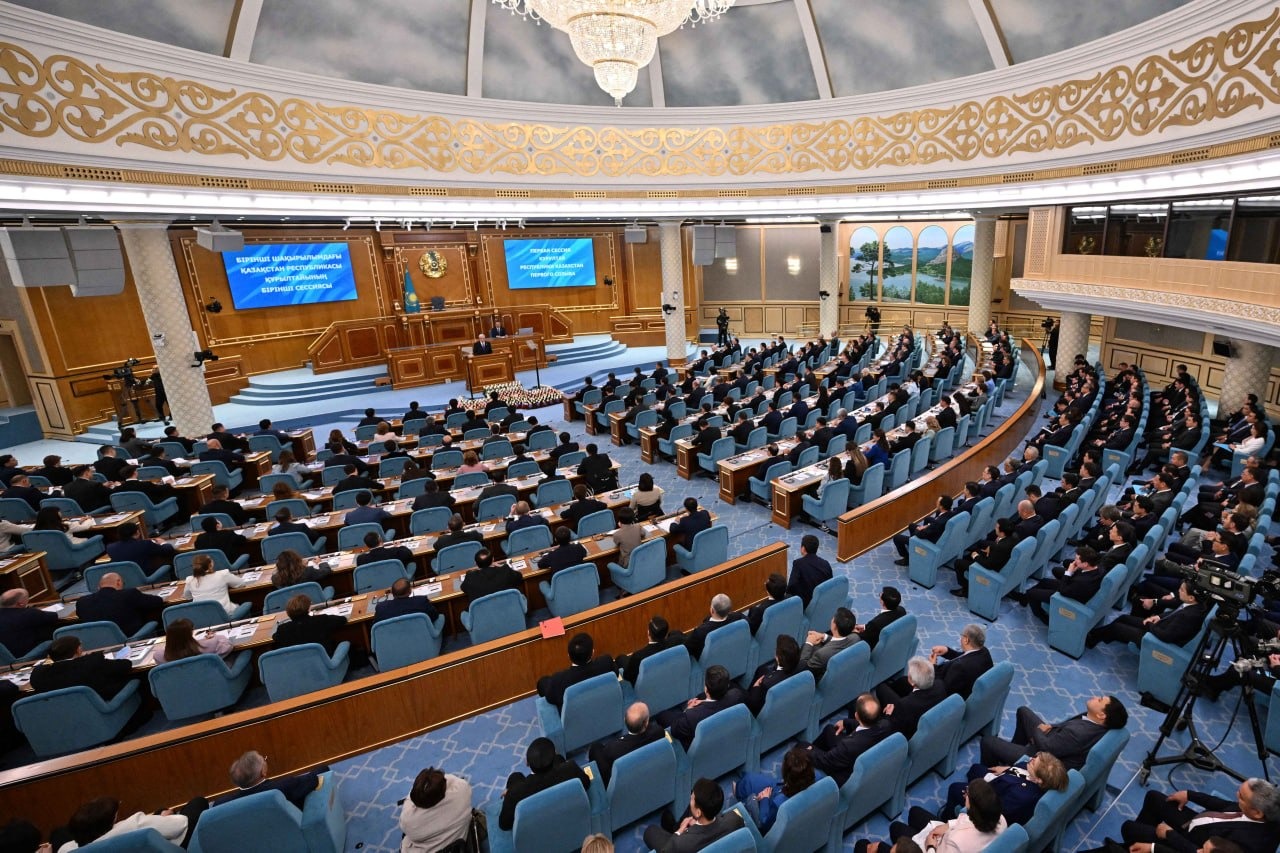
The first session of the first Kuryltai, the new unicameral Parliament formed in accordance with the Constitution of the Republic of Kazakhstan, supported by citizens in a national referendum, began in Astana.
President Kassym-Jomart Tokayev's speech at the first session should be viewed much more broadly than the parliamentary agenda. It outlined the vision of the country that Kazakhstan intends to build in a rapidly changing world, and very clearly defined the factors that determine the state's ability to maintain independence, stability, and competitiveness.
The world has truly entered a period where the old rules are no longer producing the same results. Geopolitical tensions are intensifying, trust between states is declining, the global economy is changing, and technology is advancing faster than the institutions that are supposed to manage it. Artificial intelligence is becoming a factor in economics, security, education, science, and international competition. The President also drew attention to a deeper aspect of these developments: even the interim consequences of the technological revolution are difficult to predict today.
This is why one of the central ideas of today's speech is of fundamental importance for the university and scientific community. In the new global reality, countries that are able to strengthen their sovereignty in the economy and science, master new technologies, and, as the President emphasized, develop human potential will have a chance for successful development.
This is a very important benchmark for the education system.
In the 21st century, human capital is becoming one of the state's most important resources. A university can no longer be assessed solely by the number of educational programs, diplomas, or graduates. Its importance is determined by the kind of people it trains, the knowledge it generates, its ability to advance research, work with advanced technologies, foster independent thinking, and equip young people with the intellectual tools for life in a world that will change even faster.
Today, the President directly linked the country's future to education, science, technology, labor, and human quality.
This is especially important for our students to hear.
Enormous opportunities are opening up for your generation, but at the same time, demands on knowledge and professionalism are growing. Artificial intelligence is already changing the labor market. Many traditional professions are being transformed, new specialties are emerging, and the ability to constantly learn is becoming a part of professional life. Therefore, education today cannot be viewed as a few years between school and graduation. Lifelong learning is required, mastering new tools, verifying information, working with technology, and all the while maintaining the ability to think independently.
The President also spoke today about the absolute value of labor and self-discipline. I consider this idea one of the most important for young people. Technology can greatly enhance human capabilities, but it does not replace knowledge, character, professional culture, curiosity, and the habit of seeing things through to completion.
A very serious discussion also took place about artificial intelligence itself.
This year, the government has already made decisions on integrating AI into the secondary education system, developing the digital asset industry, and implementing the Digital Kazakhstan strategy. Now the relevant legislative framework must be reviewed by the Parliament. At the same time, the government is setting the goal of attracting highly qualified specialists, advanced technologies, and capital.
When these decisions are combined, the scale of what is happening becomes clear. Kazakhstan is preparing for an economy in which technological competence will directly impact the country's competitiveness.
Therefore, universities must change along with this economy. We need modern educational programs, strong fundamental training, a research culture, cross-disciplinary collaboration among scientists, technologically competent faculty, and real opportunities for students to engage in research, create their own projects, and work with artificial intelligence professionally and meaningfully.
But today's President's speech was far from solely about technology.
A separate and, I believe, extremely important section was devoted to children and young people in the digital environment. The proposal to consider banning children under 16 from registering on social media shows how serious the impact of digital platforms on human development is becoming. The government is beginning to discuss not just access to technology, but the limits of its safe use.
For parents, teachers, and universities, this is a fundamental issue.
We live in an era when When young people are exposed to a huge flow of information daily, they encounter social media algorithms, generative artificial intelligence, deepfakes, and content whose origins are often impossible to determine at first glance. Therefore, digital literacy alone is no longer enough. Critical thinking, intellectual discipline, media literacy, the ability to distinguish knowledge from manipulation, and an understanding of the consequences of one's actions in the digital space are needed.
Technological development must go hand in hand with the development of human culture.
Another line of today's speech is directly addressed to the scientific community. The President formulated a very important principle: society must rely on reality, strive for progress, and develop science.
This idea is closely linked to how we understand our own history and national identity.
The President spoke of the need to abandon a superficial and one-dimensional approach to the past. A nation's history includes trials and tragedies, but also contains a wealth of experience in creativity, intellectual exploration, government decisions, victories, and achievements. For universities, this represents a major professional challenge: studying history with academic integrity, working with sources, preserving cultural heritage, and passing on research-based knowledge to the younger generation.
The idea of a mature nation, one that can learn from the past, honor its history, and confidently look forward, was particularly poignant.
Here, education, science, and national identity come together. Modernity does not require the renunciation of one's own culture. On the contrary, a strong society is capable of preserving historical memory while simultaneously creating technologies, developing research, and participating in global intellectual competition.
The speech also included an important decision related to books and reading: the government has been instructed to draft a new law "On Librarianship and Book Publishing," which the President directly linked to strengthening the nation's intellectual potential.
Against the backdrop of the rapid spread of short digital content, the significance of this decision goes far beyond industry regulation. Reading develops the ability to maintain attention spans, analyze complex text, discern cause-and-effect relationships, and formulate one's own position. For a university where knowledge, research, and thought remain the foundation of education, a culture of reading is of strategic importance.
The new model of the Kuryltai itself deserves special attention.
The President has defined it as a platform for national dialogue. Strategically important bills must undergo comprehensive review with the participation of the expert community. A digital E-Parliament system is being created. The work of parliamentarians must be based on the rule of law, transparency, mutual respect, and pluralism.
This opens up another important opportunity for scientists. The modern state increasingly requires decisions based on data, research, and professional expertise. The scientific community must be present in public debate, provide an objective assessment of complex processes, propose solutions, and participate in the formation of public policy where specialist expertise is needed.
This also changes the perception of the role of the university. The university is both an educational organization and an intellectual institution of society, a space for professional dialogue, research, and the development of solutions for the future.
There is one more idea from today's speech that I would like to specifically address to our students and young scientists. The President noted that the proportion of women and youth in the new Kuryltai has increased significantly, and representatives of the new generation are increasingly occupying leadership positions in public administration, organizations, and business. The Head of State linked the ultimate goal of institutional reforms to the renewal of personnel and the arrival of people capable of innovative and creative thinking.
This is an important signal to the young people of Kazakhstan.
The country needs your knowledge. It needs engineers, researchers, teachers, programmers, entrepreneurs, doctors, managers, and artificial intelligence specialists. It needs people who can see a problem, find a solution, and be responsible for the results of their work.
And here, education becomes part of a much larger national task.
Today, the Kuryltai began its work for the first time. The Government will be formed soon, and in the second half of September, the Kazakhstan Halyk Kenesi will begin its work. After the formation of new state institutions, the President will deliver his annual Address to the People of Kazakhstan. The country is entering a period of practical implementation of the new political and legal system.
But state institutions alone don't create the future. People do.