Shakarim Studies at the Crossroads of New Research
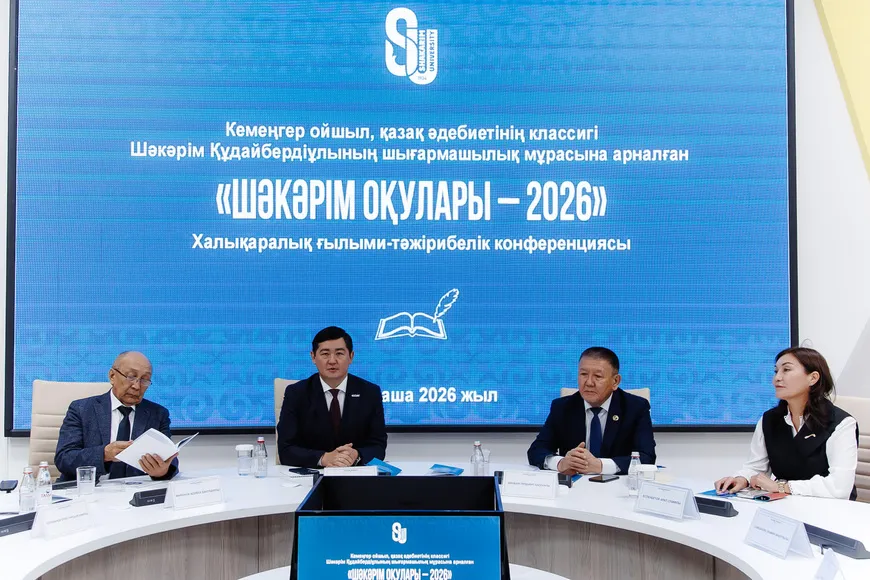
Shakarim University hosted the traditional international scientific and practical conference “Shakarim Readings – 2026”, dedicated to exploring the creative and spiritual legacy of Shakarim Kudaiberdiuly, the great Kazakh thinker, poet, philosopher and educator.
The conference aimed to conduct a comprehensive study of Shakarim’s legacy across literary studies, philosophy, history, religious studies, textual scholarship and cultural studies; compare and examine different textual versions of the poet’s works; and determine the relevance of his spiritual heritage to contemporary society.
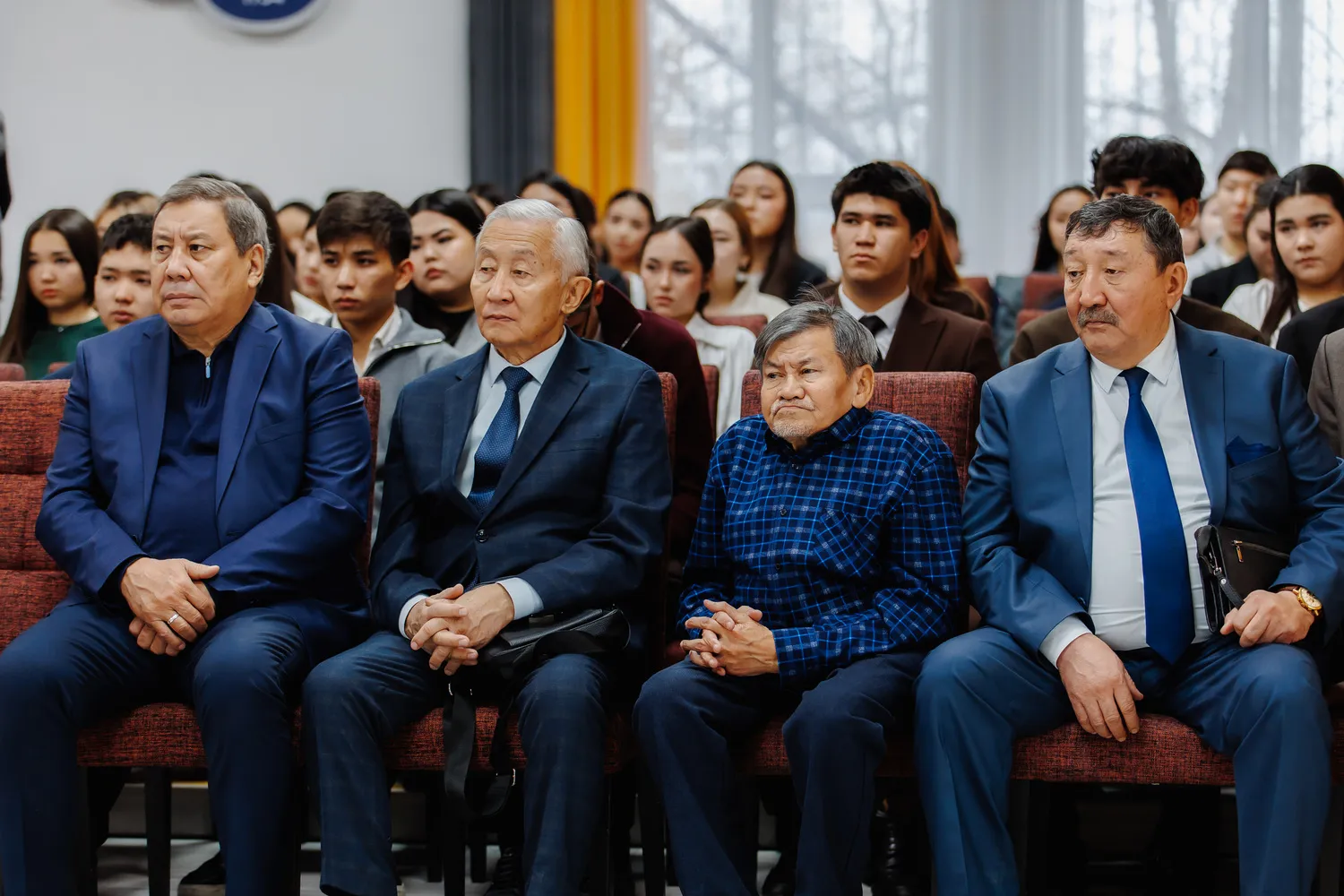
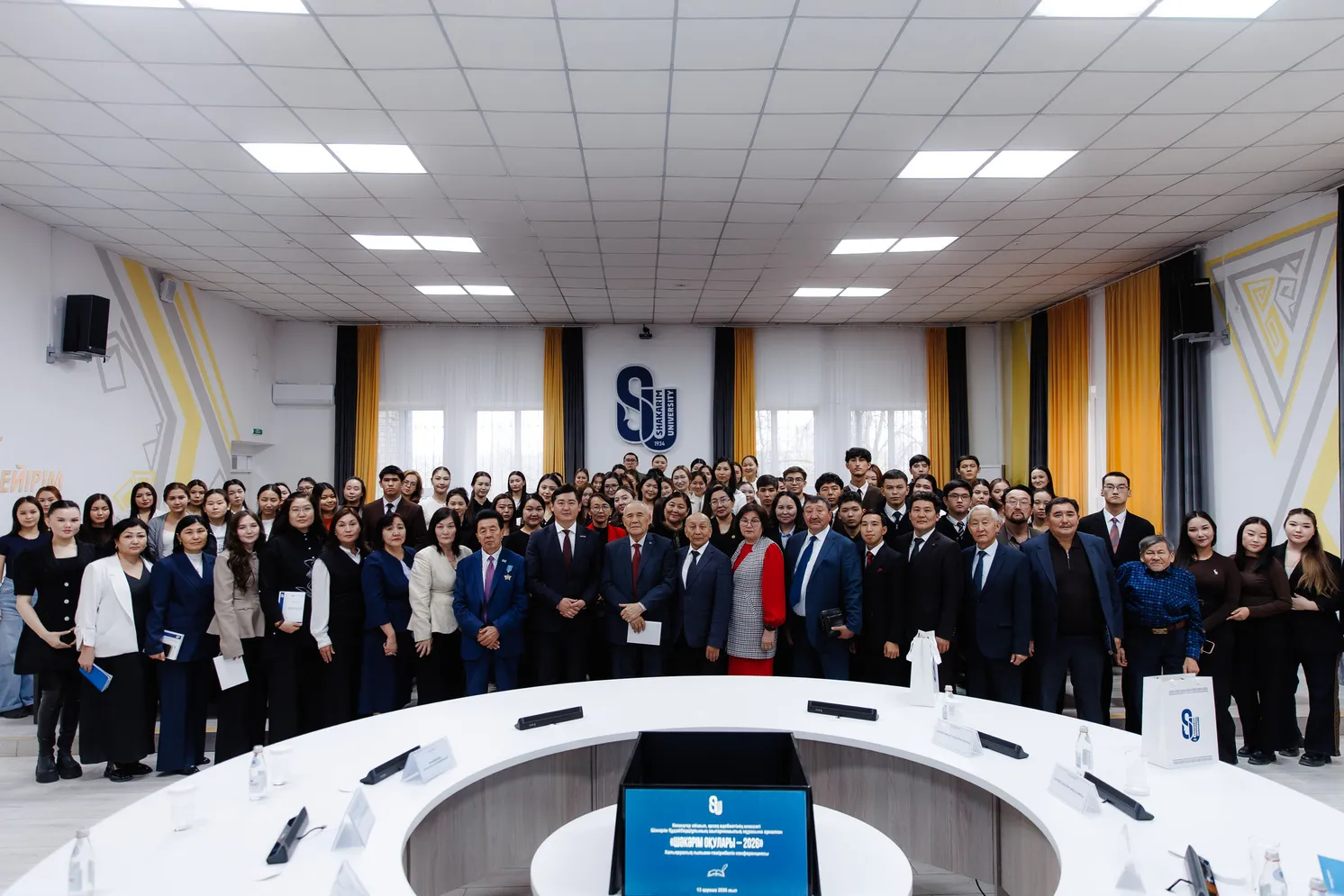
The scientific gathering brought together prominent scholars and researchers from Kazakhstan and abroad, university faculty members and young academics. Among the participants were PhD Hasan Fahri Dural, representing the Ministry of National Education of the Republic of Türkiye; Galina Alekseeva, Academic Director of the Leo Tolstoy Yasnaya Polyana Museum-Estate, Candidate of Philological Sciences and Honoured Worker of Culture of the Russian Federation; PhD Bakhtiyar Buteev, researcher at the Scientific Institute for the Study of the Ulus of Jochi; Yerkin Shukimanov, Professor at the Kurmangazy Kazakh National Conservatory and Honoured Cultural Worker of the Republic of Kazakhstan; Adilbek Amirenov, Associate Professor at Alkey Margulan University and Candidate of Philological Sciences; and Elmira Samekbaeva, Candidate of Philological Sciences and Associate Professor. They presented research papers exploring various aspects of Shakarim’s creative legacy.
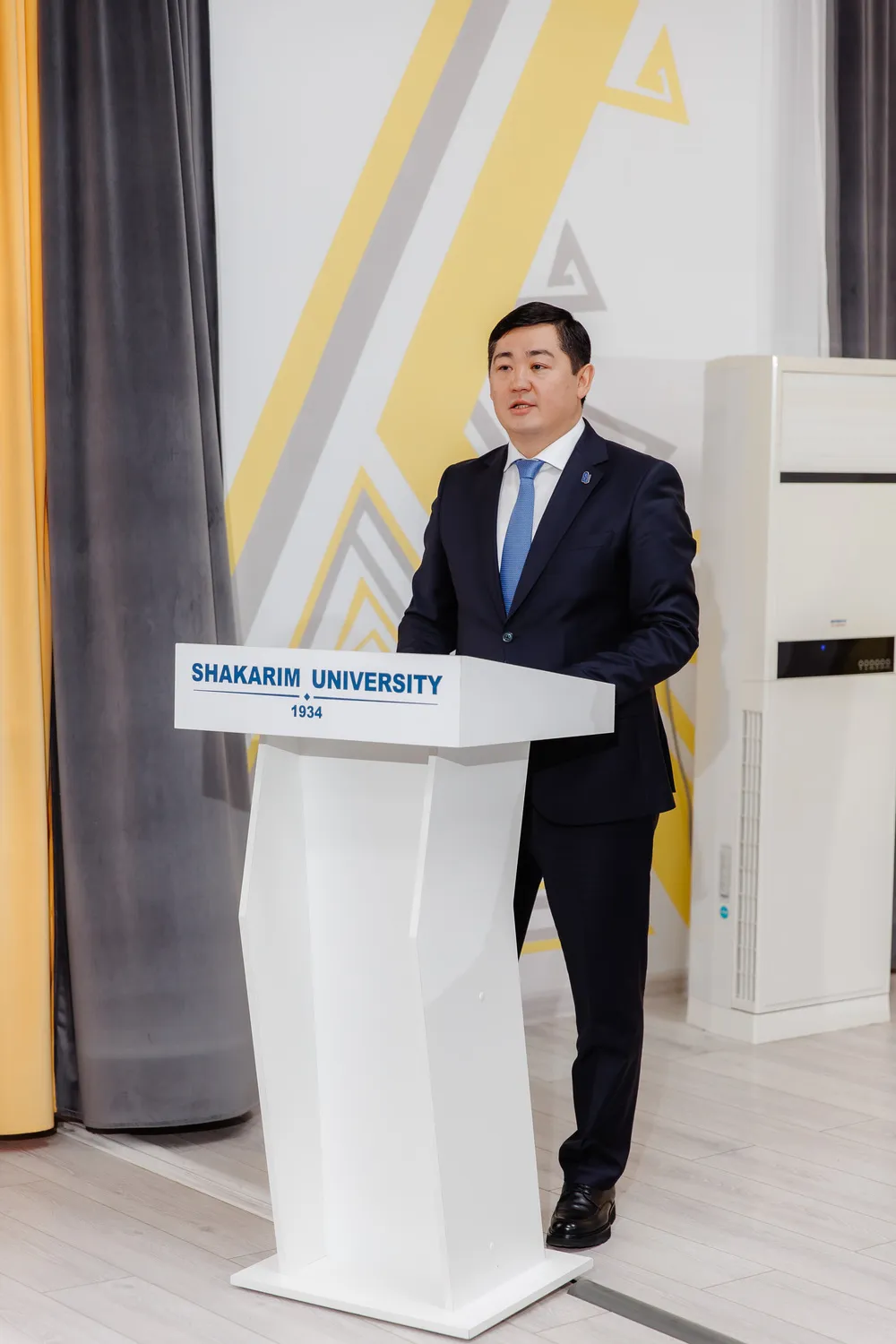
Turdikul Shanbay, Head of the Shakarim Studies Research Centre and coordinator of the conference, invited Duman Orynbekov, Rector of Shakarim University, to deliver the opening address. The Rector highlighted the work carried out in recent years to study and promote Shakarim’s legacy. In particular, the activities of the Shakarim Studies Research Centre have been revitalised, a Shakarim Scientific Museum has been opened, and the scholarly and educational journal Shakarim has resumed publication. In addition, the Shakarim Kazakh-Chinese Research Centre was established at Xi’an Jiaotong University in China.
“As an institution bearing Shakarim’s name, it is our responsibility to lead all research related to his legacy. Our university scholars are implementing two major research projects that comprehensively explore Shakarim’s life and intellectual heritage. Recently, as part of one of these projects, a scientific expedition entitled ‘Following the Footsteps of Shakarim’s Pilgrimage’ took place in Türkiye. During the expedition, we reached an agreement to establish a Shakarim Research Centre at Pamukkale University in Denizli. Targeted efforts are currently underway in this direction. We hope that the outcomes of these projects will make a substantial contribution to Shakarim studies,” said Duman Orynbekov, inviting scholars specialising in Shakarim’s legacy to collaborate with the university.
The opening session also featured welcoming remarks by Arap Espenbetov, Honoured Worker of Kazakhstan and Professor; Erlan Sydykov, Rector of L.N. Gumilyov Eurasian National University; and Georgiy Pryakhin, Vice-President of the Russian Academy of Literary Arts.
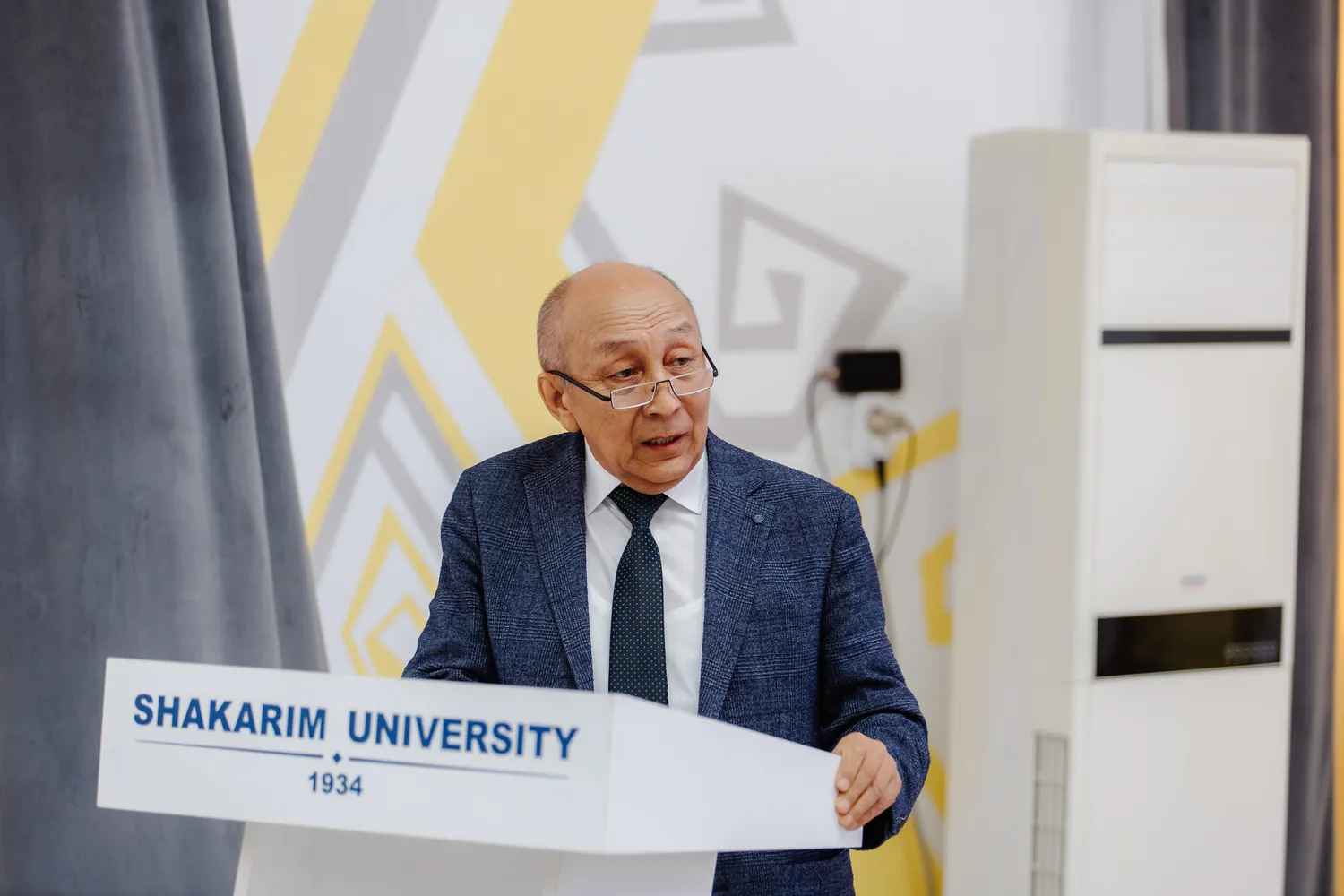
In his presentation, Adilbek Amirenov, Associate Professor at Alkey Margulan University and Candidate of Philological Sciences, explored the “mind” concept in Shakarim’s works from linguistic, historical and philosophical perspectives. He presented a linguostatistical map of the concept, examined the diachronic and semantic evolution of the lexeme, and traced its etymological origins in ancient Turkic languages. He also analysed authorial metaphors and ethical concepts characteristic of Shakarim’s individual literary style, systematising the philological and conceptual foundations of the “mind” concept in the poet’s legacy.
Dr Hasan Fahri Dural presented a comparative study of Fuzuli’s Layli and Majnun and Shakarim Kudaiberdiuly’s poem of the same name. He explained that the two works had been compared in terms of plot, characters, structure and motifs, with particular attention to the fact that Shakarim identified Fuzuli as one of his sources.
“The research findings show that Shakarim adopted the basic plot structure and most of the episodes from Fuzuli, while some couplets were translated almost word for word. Fuzuli’s masnavi, consisting of 3,096 couplets written in the aruz metre, was transformed by Shakarim into a poem of approximately 1,680 lines composed in eleven-syllable traditional Kazakh verse. The Sufi concept of wahdat (unity) found in Fuzuli’s work was also reinterpreted as a religious and ethical love narrative enriched with proverbs, similes and customs characteristic of the Kazakh steppe. Thus, Shakarim’s work is not a literal translation of Fuzuli’s poem, but an original reinterpretation within the traditions of nazira and free adaptation, effectively giving Fuzuli’s work a distinctly Kazakh character,” he noted.
Yerkin Shukimanov focused on the history of research into Shakarim’s musical heritage, examining how the poet’s songs were preserved, disseminated, transcribed into musical notation, collected and introduced into academic circulation. He discussed the historical significance of the versions included in the collections compiled in the 1920s and 1930s by Dutch musicologist Alvin Bimboes and Russian ethnographer Alexander Zataevich. He also highlighted the contributions of Shakarim’s son Akhat Kudaiberdiyev, local researcher Token Ibragimov and singer Keldenbay Olmesekov to preserving the poet’s musical legacy and passing it on to future generations. According to the speaker, the efforts of researchers and collectors have identified 24 songs and one instrumental composition by Shakarim.
Alongside research into his musical heritage, the linguistic features of Shakarim’s works also attracted considerable attention. Elmira Samekbaeva, Candidate of Philological Sciences and Associate Professor at the Department of Kazakh Philology of Shakarim University, delivered a presentation on the theoretical and methodological foundations for compiling The Dictionary of Shakarim’s Language. Examining the distinctive features of authorial lexicography, she discussed the dictionary’s objectives, sources, structure and underlying principles. She also analysed the selection of lexical units from Shakarim’s works, their semantic classification, frequency analysis and description supported by textual evidence.
The conference addressed a wide range of topics, including the study and publication of Shakarim’s works, textual scholarship concerning his legacy, the spiritual continuity between Abai and Shakarim, the thinker’s philosophical worldview, his doctrine of conscience, literary and aesthetic views, musical heritage, and the translation of his works into other Turkic languages.
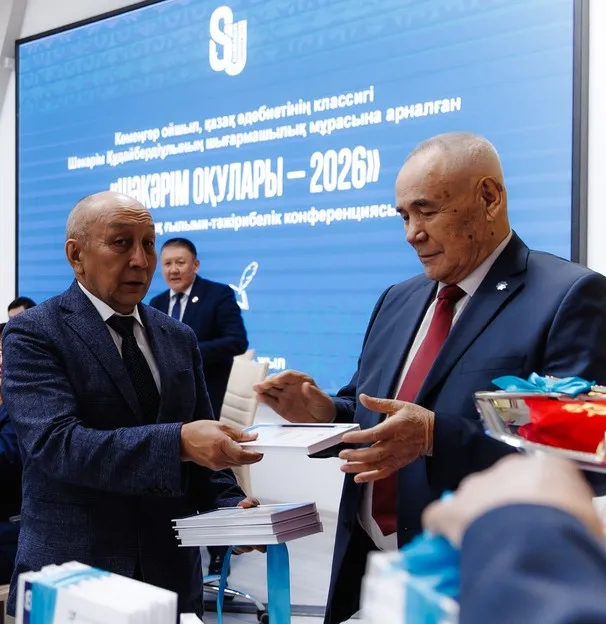
The programme also included the presentation of Literary Theory and Literary Text Analysis, a book by Zhanbota Sekey, Senior Lecturer at the Department of Kazakh Philology and Candidate of Philological Sciences, published as part of the “Shakarim Library” series. In addition, exhibitions entitled Shakarim’s Legacy: History and Lessons and Shakarim’s Spiritual Heritage were organised. Visitors were also presented with a collection of illustrations dedicated to Shakarim’s life and creative work.