When sustainability becomes a university strategy: Shakarim University in THE Sustainability Impact Ratings 2026
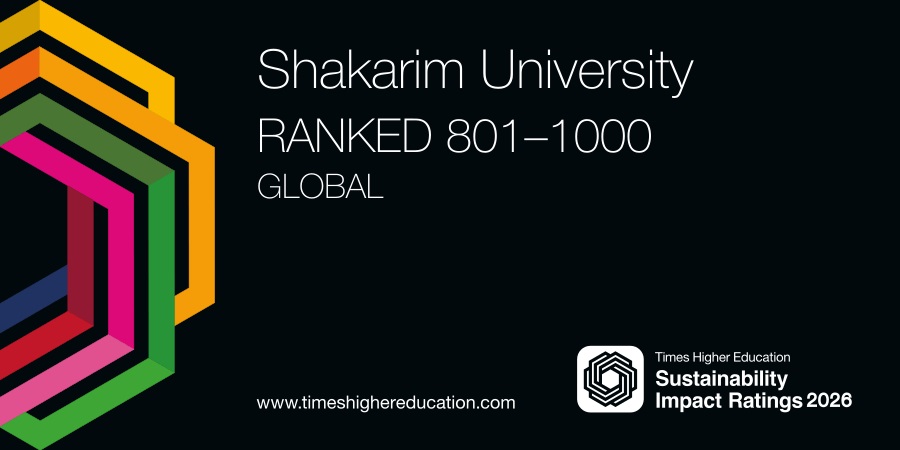
Shakarim University was included in the international Times Higher Education Sustainability Impact Ratings 2026 and confirmed its positions on 15 of the 17 UN Sustainable Development Goals.
Shakarim University has strengthened its presence in the international educational space by entering THE Sustainability Impact Ratings 2026 - one of the most significant global rankings assessing the contribution of universities to achieving the UN Sustainable Development Goals.
In the overall ranking, Shakarim University took position 801–1000 among 1603 universities in the world represented in the overall ranking of THE Sustainability Impact Ratings 2026.
This is an important result not only for the university, but also for the entire regional system of higher education in Kazakhstan. This is not just about getting into the international table. We are talking about recognizing that a regional university is capable of being part of the global agenda - through education, science, environmental solutions, social responsibility, personnel training and real projects for the territory.
Why is this rating of particular importance?
Times Higher Education Sustainability Impact Ratings are not a classic ranking of universities, which primarily evaluate academic reputation, publication activity or citations. This is a different type of rating.
It answers a broader question: what real contribution does a university make to society?
THE emphasizes that the Sustainability Impact Ratings, formerly known as THE Impact Rankings, is the only global ranking that measures how universities around the world are promoting sustainable development in line with the UN Sustainable Development Goals. In 2026, the ranking covered 1,646 universities from 116 countries and territories, and was assessed against 17 individual SDG tables and one overall ranking.
That is why participation in such a ranking means much more for a university than its formal international presence. It is a test of the maturity of management culture, social policy, research agenda, environmental responsibility and ability to deal with long-term challenges.
For Shakarim University, this result is especially important because the university is located in a region with a special historical, environmental and scientific burden. The Abay region is the territory of Abay, Semey, the former Semipalatinsk nuclear test site, an agricultural economy, young people demanding new opportunities, and a region that needs strong personnel, applied science and modern technologies.
Therefore, the inclusion of Shakarim University in THE Sustainability Impact Ratings 2026 should be seen as an indicator that university strategy is beginning to be measured not only by internal results, but also by an international frame of reference.
Overall result: Shakarim University in the group of 801-1000 best universities in the world for sustainable impact
In the overall ranking of THE Sustainability Impact Ratings 2026, Shakarim University was ranked 801–1000 among 1603 universities in the world.
For the university, this means reaching a new level of international visibility. It is especially important that Shakarim University is represented on 15 of the 17 UN Sustainable Development Goals.
This shows not isolated success in one direction, but complex work. The university demonstrates results in education, food security, sustainable agriculture, decent employment, gender equality, clean energy, climate, responsible consumption, ecosystem conservation, partnerships and social sustainability.
In other words, Shakarim University enters the ranking not as a university that submitted a separate project, but as an organization where sustainable development becomes part of the institutional model.
Strongest result: SDG 2 – “Zero Hunger”
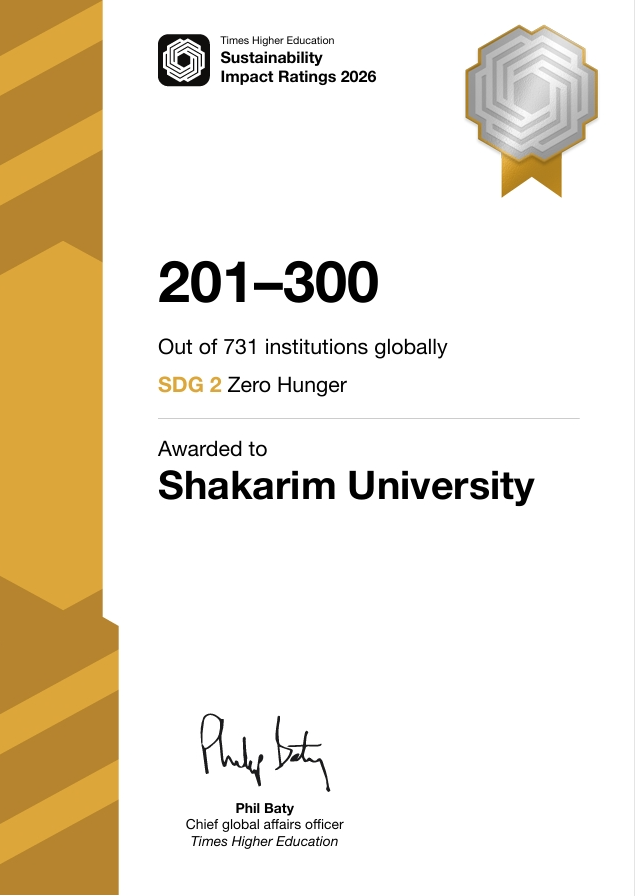
One of the most significant results of Shakarim University is position 201–300 in the world according to SDG 2 “Zero Hunger” among 731 universities.
For the Abay region this is a particularly important indicator. Sustainable Development Goal 2 is not just about ending hunger in the literal sense. In university logic, it covers food security, agricultural science, sustainable agriculture, bioresources research, food technology, veterinary medicine, food quality, water and land resources.
This is where Shakarim University has a strong regional base. The university develops agricultural, veterinary, food, biological and technological areas. The university structure includes laboratories, an agrobiological base, an agrotechnopark, research and educational programs focused on the real needs of the region.
This result shows: Shakarim University is able not only to train personnel for the agro-industrial complex, but also to participate in the formation of a new agricultural model of the region - more technologically advanced, scientifically sound and sustainable.
This is of strategic importance for Kazakhstan. Food security is becoming one of the key factors of national sustainability. In the context of climate change, pressure on water resources, transformation of agriculture and the need to increase productivity in the agricultural sector, the role of regional universities is increasing. They are closer to the land, the farmer, production, laboratory analysis and the real needs of the economy.
SDG 8: decent work and economic growth
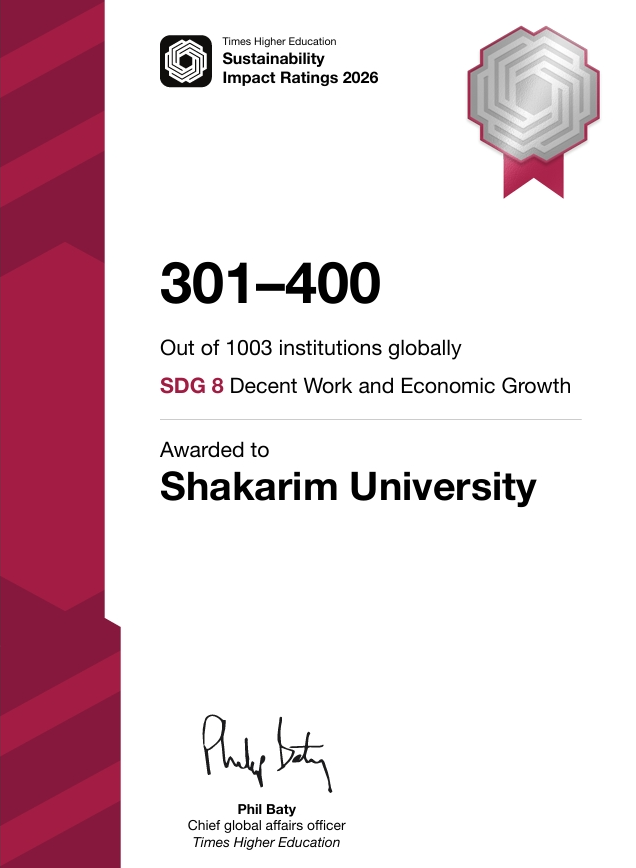
In SDG 8 “Decent Work and Economic Growth”, Shakarim University ranked 301–400 in the world among 1003 universities.
This is one of the key indicators for understanding the role of a modern university. Today, a university is judged not only by how many students it educates, but also by how much its graduates are in demand, how connected the university is to employers, and how it participates in job creation, startups, the entrepreneurial environment, and professional trajectories.
For Shakarim University, this indicator reflects several important processes.
Firstly, the university consistently strengthens the connection between educational programs and the real sector of the economy. Secondly, laboratories and production sites are being modernized. Thirdly, the entrepreneurial and project culture of students is developing. Fourthly, interaction with employers and industrial partners is expanding.
Against the backdrop of the signing of international agreements, the development of engineering areas, the launch of laboratories and the growth of project activity of the university, the result for SDG 8 confirms that Shakarim University is increasingly perceived as a participant in the economic development of the region.
This is especially important for the Abay region, where the development of human capital is directly related to industry, agriculture, energy, logistics, construction, ecology and new technology sectors.
SDG 4: quality education as the basis for sustainability
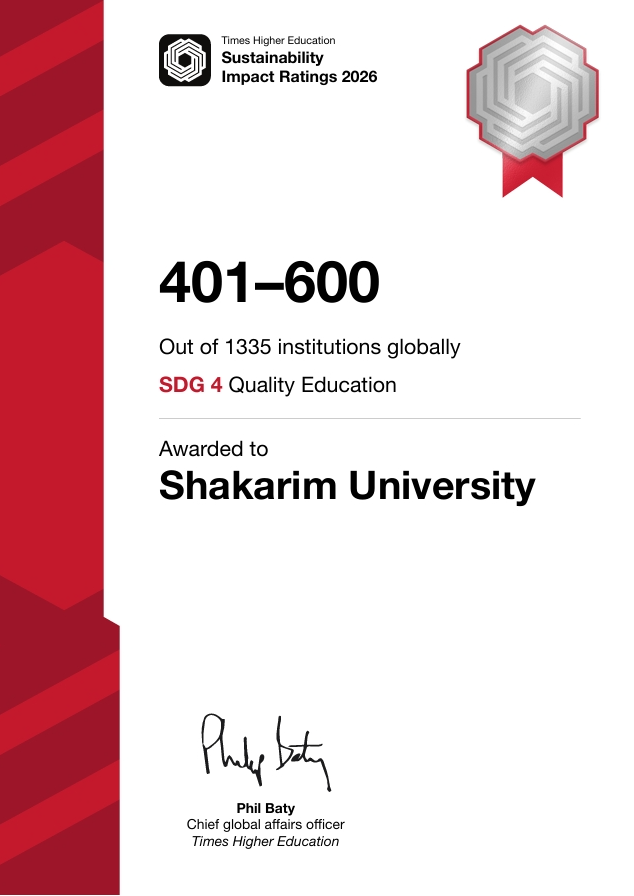
In the SDG 4 “Quality Education” area, the university was included in the group 401–600 among 1335 universities in the world.
This indicator is one of the basic ones for any university. But in the context of THE Sustainability Impact Ratings, it is interpreted more broadly than just the quality of lectures or training programs.
We are talking about access to education, educational policy, opportunities for different groups of the population, lifelong learning, training of specialists, the impact of the university on schoolchildren, students, teachers and local communities.
For Shakarim University, this result is associated with the internal transformation of recent years. The university is updating its academic structure, developing research and higher schools, strengthening its personnel policy, attracting young teachers and science professors, modernizing its infrastructure and expanding its international programs.
Quality education today cannot be considered separately from laboratories, digitalization, social conditions, academic integrity, international partnerships and connections with the labor market. Therefore, the result for SDG 4 shows that the university is building education as an integral system.
SDG 5: Gender Equality and Social Maturity
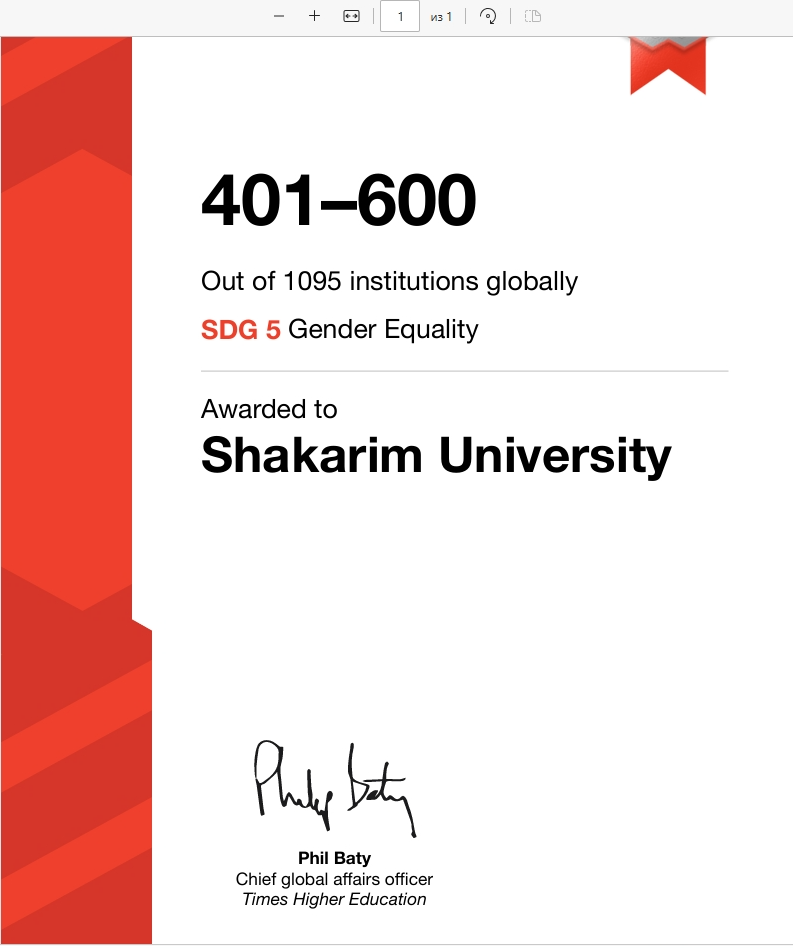
In SDG 5 “Gender Equality” Shakarim University ranked 401–600 among 1095 universities in the world.
This indicator is of fundamental importance for state and social development. Gender equality in the university environment is not just a matter of statistics. This is access to education, equal opportunities for career growth, participation of women in science, management, research, student initiatives and public life.
Shakarim University's results show that the university is creating a more open and balanced environment where professionalism, competence and personal responsibility matter.
This is especially important for the region. In conditions when young people increasingly connect their future with the quality of the environment, fairness of opportunities and social culture, the university is becoming not only a place of learning, but also a space for the formation of new norms.
SDG 7: affordable and clean energy
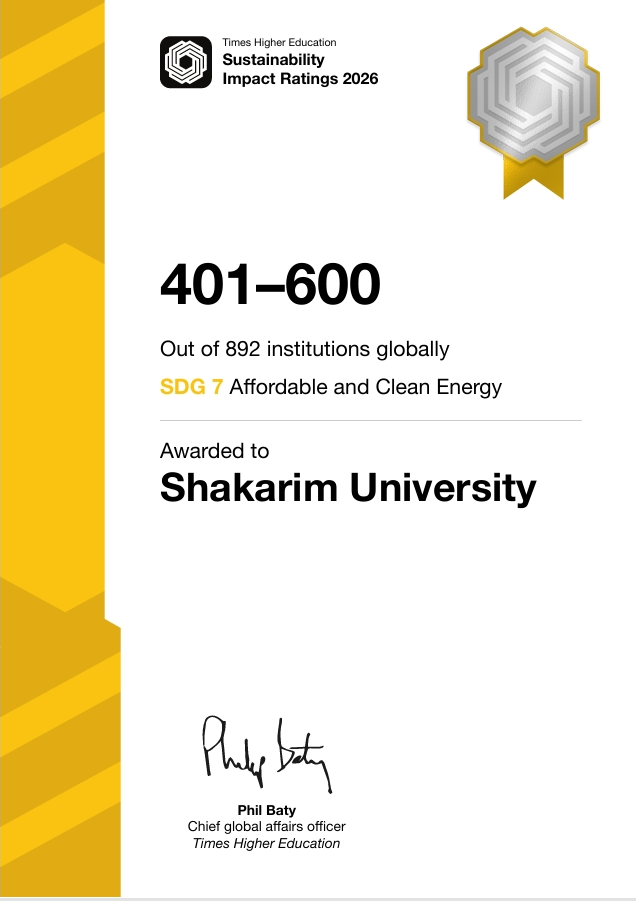
In the SDG 7 “Affordable And Clean Energy” area, the university was included in the group 401–600 among 892 universities in the world.
This result is especially significant against the background of the current strategic projects of Shakarim University. The university develops engineering, energy, technology and applied areas, including through international cooperation.
In recent years, energy has become one of the main issues on the global agenda. The transition to new energy sources, increasing energy efficiency, developing electrical solutions, automation and training of engineering personnel - all this requires the participation of universities.
For Shakarim University, this direction has not only educational, but also applied meaning. The university is located in a region where issues of energy, industry, ecology and technological modernization are directly related to the future of the economy.
That is why the result for SDG 7 shows that the university agenda is gradually reaching the level of strategic technological tasks.
SDG 12 and SDG 13: responsible consumption and the climate agenda
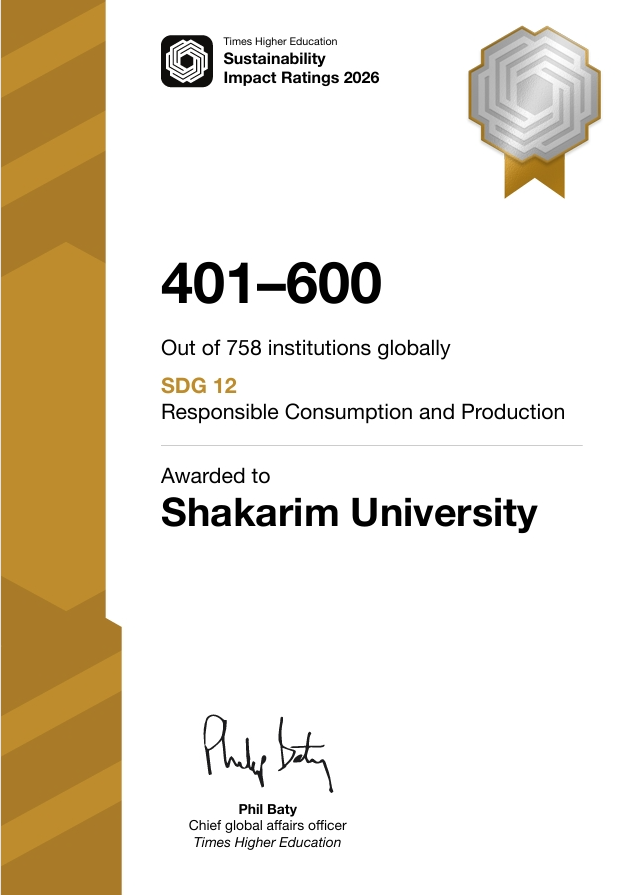
In SDG 12 “Responsible Consumption and Production” Shakarim University entered the group 401–600 among 758 universities in the world.
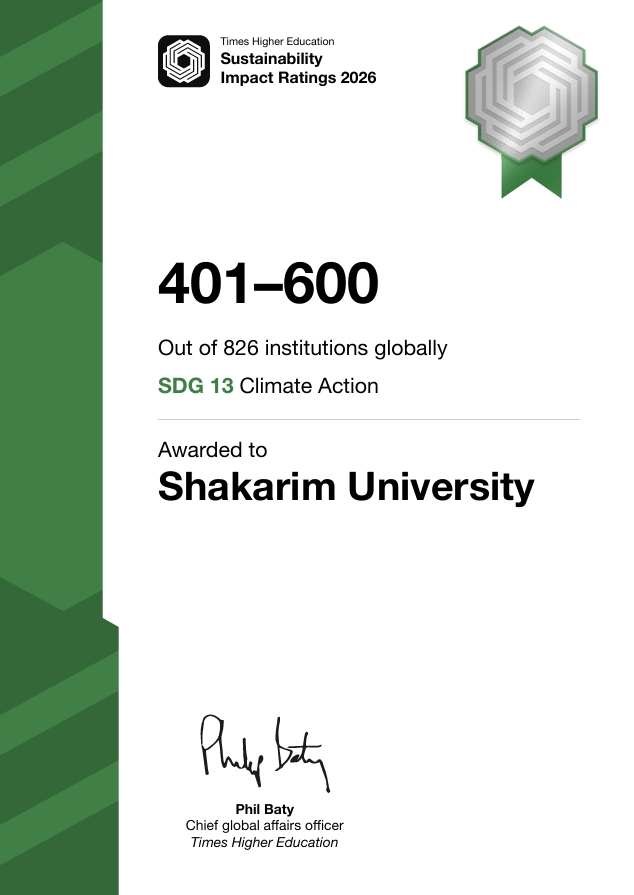
In SDG 13 “Climate Action” the university also ranked 401–600 among 826 universities in the world.
These two areas are closely related. Responsible consumption, sustainable production, rational use of resources, reducing the ecological footprint, climate research and environmental culture become part of the modern university mission.
For Shakarim University, these results are of particular significance given the environmental history of the region. The Abay region is associated with the consequences of the Semipalatinsk nuclear test site, issues of radiation safety, ecosystem restoration, rational land use and sustainable environmental management.
The University develops research in the field of radioecology, reforestation, bioresources, agroecology, natural environment and environmental monitoring. Therefore, the indicators for SDG 12 and SDG 13 should be considered as confirmation not of declarative, but of practical environmental work.
SDG 15: Conservation of Terrestrial Ecosystems
In the SDG 15 “Life on Land” area, Shakarim University was included in the group 401–600 among 658 universities in the world.
This direction is especially important for the region, where issues of land, forests, bioresources, pastures, agriculture and restoration of the natural environment are of direct importance to the quality of life of people.
The work of the university in this area is related to the training of specialists, research, environmental projects, interaction with environmental structures and participation in solving problems of restoration of territories.
SDG 15 shows that the university does not simply study nature as an object of science, but is included in the broader process of conservation and restoration of ecosystems.
Other directions: complexity as the main indicator
Shakarim University is also represented in other areas of THE Sustainability Impact Ratings 2026.
According to SDG 1 “No Poverty”, the university ranked 601–800 among 931 universities in the world.
According to SDG 10 “ReducedInequalities” - 601–800 among 932 universities.
According to SDG 11 “Sustainable Cities and Communities” - 601–800 among 865 universities.
According to SDG 6 “Clean Water and Sanitation” - 601+ among 797 universities.
According to SDG 3 “Good Health and Wellbeing” - 801–1000 among 1254 universities.
According to SDG 16 “Peace, Justice and Strong Institutions” - 801+ among 914 universities.
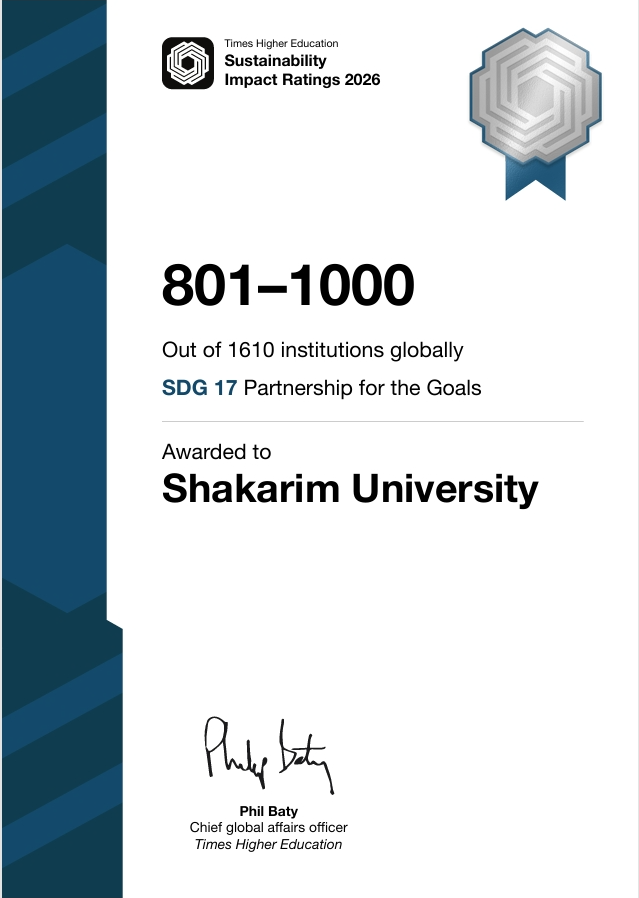
According to SDG 17 “Partnership for the Goals” - 801–1000 among 1610 universities.
At first glance, these positions differ in range. But in an analytical sense, something else is more important here: the university is represented on a wide range of Sustainable Development Goals. This means that Shakarim University is not building a separate ranking campaign, but a multidisciplinary model of participation in sustainable development.
This approach is consistent with the nature of a regional university. It must simultaneously work with education, science, youth, ecology, the labor market, social initiatives, partnerships and territory development.
What does this mean for the Abay region?
For the region, Shakarim University's participation in THE Sustainability Impact Ratings 2026 has several levels of significance.
The first level is reputational.
The Abay region receives a university that is included in one of the most authoritative international systems for assessing the social impact of universities.
The second level is personnel.
The rating confirms that the university is developing in those areas that are important for the future economy of the region: agricultural science, engineering, energy, ecology, education, social sustainability, entrepreneurship.
The third level is scientific.
Indicators on climate, ecosystems, energy, food security and sustainable production demonstrate that the university is capable of being not only an educational organization, but also a research platform.
The fourth level is social.
The university is increasingly becoming a space where the values of responsibility, openness, equal opportunity, civic participation and respect for the territory are formed.
This is fundamental for the Abay region. The region needs not only personnel, but also institutions that are capable of creating long-term meaning for development. A university is just such an institution.
What does this mean for Kazakhstan?
For Kazakhstan, the result of Shakarim University shows that the international competitiveness of higher education can be formed not only in capitals and megacities.
Regional universities are able to enter the global agenda if they have a strategy, team, scientific directions, partnerships and managerial will.
In this sense, Shakarim University becomes an example of how a regional university can respond to national challenges:
training for the new economy;
development of applied science;
involvement of young researchers;
support for sustainable agriculture;
environmental responsibility;
expansion of international relations;
creation of a university environment working for the development of the territory.
This is especially important in the context of state policy in the field of science and higher education. A modern university should be more than just a place to obtain a diploma. It should be a center of competence, a research platform, a partner of the region and a participant in the international scientific and educational system.
Rector of Shakarim University Duman Orynbekov: The rating confirms the correctness of the chosen strategy
Commenting on the rating results, Shakarim University rector Duman Orynbekov noted that the university’s participation in THE Sustainability Impact Ratings 2026 is the result of systematic work in recent years.
- This rating is important to us because it measures more than just academic performance. It shows how a university benefits society, the region, the economy, the environment and future generations. Shakarim University is located in a region with a special history and great responsibility. Therefore, sustainable development for us is part of the university strategy.
According to the rector, strong results in food security, decent work, quality education, energy, climate and ecosystems show that the university is moving in the right direction.
-A regional university should be close to real life. To a farmer, a school, a laboratory, an enterprise, a young man who is looking for his place. If a university is able to combine education, science and the needs of the territory, it becomes a real development factor. THE results confirm that Shakarim University is following exactly this path, - Duman Orynbekov emphasized.
From rating to new responsibility
Inclusion of Shakarim University in THE Sustainability Impact Ratings 2026 is not the final point. This is a new bar.
Now the university faces even more specific tasks: strengthening the evidence base in each area of the SDGs, developing publication activity, expanding international partnerships, strengthening social programs, improving the quality of sustainable development management, involving students and teachers in projects that have a real social impact.
Particular attention will be paid to those areas where the university has already shown strong results: food security, decent work and economic growth, quality education, clean energy, climate agenda, responsible production and conservation of terrestrial ecosystems.
It is these areas that coincide with the long-term interests of the Abay region and Kazakhstan.
What is the result?
The results of THE Sustainability Impact Ratings 2026 show the main thing: Shakarim University is becoming a university whose impact is measured not only within the campus.
His work extends to the region, to the economy, to the environmental agenda, to international partnerships, to the training of young specialists and to the quality of life of people.
And if previously sustainable development was perceived as a global term, far from everyday university life, today Shakarim University shows the opposite: sustainability begins with specific solutions - in the classroom, laboratory, agricultural field, hostel, research center, partner project, student initiative.
What makes this result particularly significant is the fact that, having taken a position in the range of 801–1000 among 1,603 universities in the world in THE Sustainability Impact Ratings 2026, Shakarim University was among the top ten universities in Kazakhstan in terms of sustainable development indicators. This indicates that the university not only successfully competes at the international level, but is also among the national leaders in the quality of management, social responsibility, environmental agenda, scientific development and contribution to the achievement of the UN Sustainable Development Goals. For a regional university, this is an indicator of systemic maturity, the effectiveness of the chosen strategy and the ability to work at the level of the best educational institutions in the country.
That is why participation in THE Sustainability Impact Ratings 2026 is not only an international assessment. This is a confirmation of the new role of the regional university of Kazakhstan: to be a point of growth, a source of knowledge and a participant in decisions that are important for the country and the future.