Inclusive Education: International Experience and New Initiatives
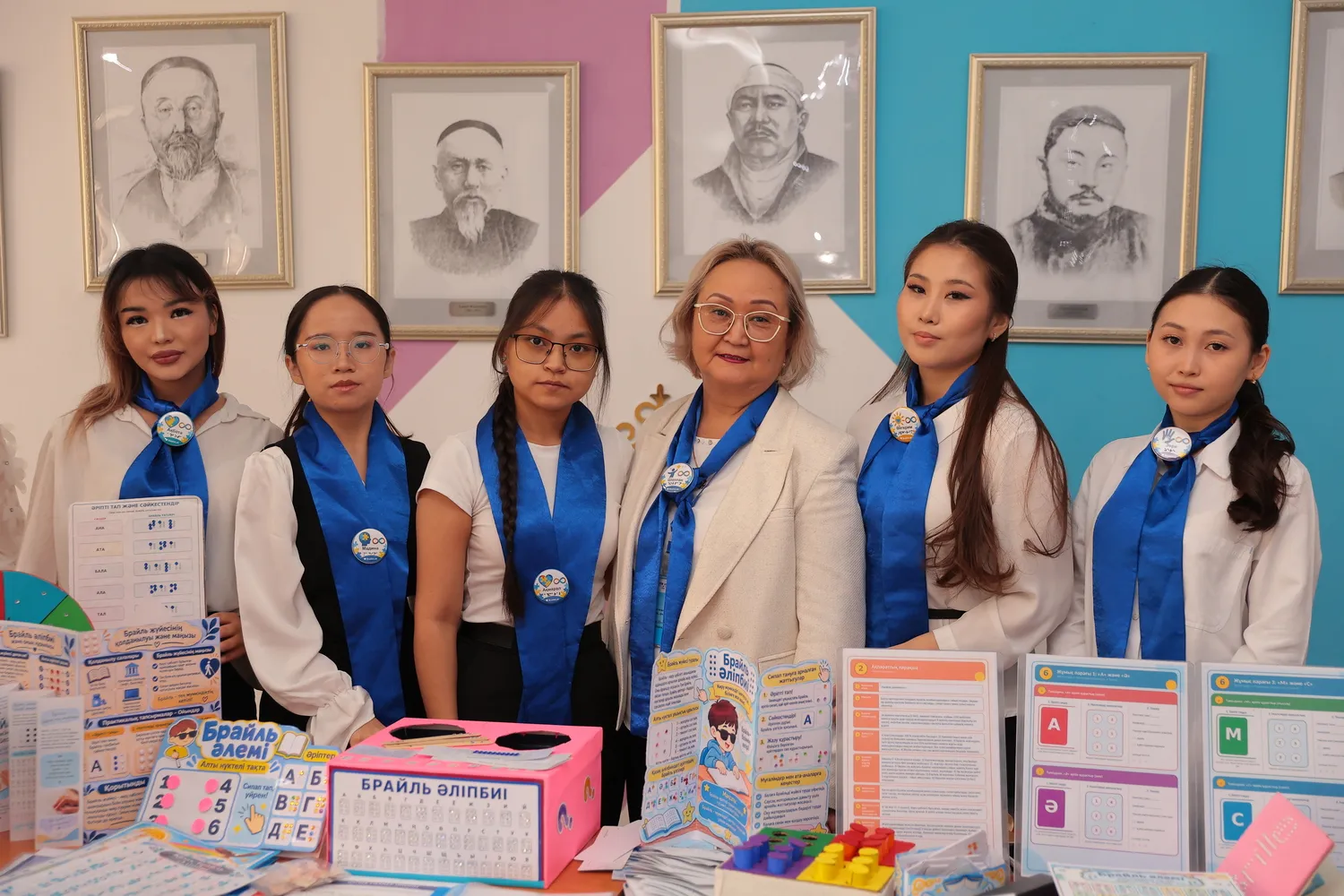
An international scientific-practical seminar on "Inclusive education in the era of changes" was held at Shakarim University, organized by the "Pedagogy and Psychology" department and the Abay Region Education Department. The international meeting was devoted to the discussion of modern methods of providing psychological and pedagogical support to children with special educational needs, including children with autism spectrum disorders (ASD).
The main goal of the seminar is to study the international experience in the development of inclusive education, to introduce evidence-based educational practices, to strengthen the connection between scientific research and pedagogical practice. The event was attended by pedagogues, researchers, methodologists, heads of educational organizations, domestic and foreign experts.
Head of the Department of Pedagogy and Psychology, Möldir Seydina, opened the meeting and presented the congratulatory speech to Dinara Ospanova, vice-rector for academic affairs.
In her speech, Dinara Manapovna emphasized the importance of inclusive education for society, and every child should have an equal opportunity to receive quality education, develop abilities and become a full member of society. noted that. According to him, the main task of today's international seminar is to consider effective ways to support children with special educational needs within the framework of priorities in the field of education defined by the Head of State, and to strengthen the relationship between science and practice. It is very important to create a suitable environment for every child by introducing the achievements of modern science, technology and innovation into the educational process.
During the seminar, domestic and foreign experts gave meaningful reports on the actual issues of inclusive education.
Kulmaria Ahmedieva, senior lecturer of the Department of Special Pedagogy of the Kazakh National Pedagogical University named after Abai, senior researcher of the "National Scientific and Practical Center for the Development of Special and Inclusive Education" in Kazakhstan Continuity of inclusive and special education systems: scientific-methodological mechanisms of support for children with special educational needs" in his report on the mutual continuity of special and inclusive education systems, scientific-methodical bases of support for children. raised the issue of integrating the philosophy of education with the technologies of teaching subjects in the 12-year education system. In Kyrgyzstan, this position starts from the period of preschool education. The principle of accepting a child and a person as they are is included in the standards of preschool education, as well as in the standards of school and higher pedagogical education. If the philosophy of inclusive education becomes the dominant direction of the state standard, this will pave the way for its practical implementation," he said.
A professional dialogue platform for representatives of higher and technical-vocational educational organizations was organized within the seminar. The participants discussed the international trends and innovative practices of developing an inclusive educational environment, the developmental characteristics and individual educational needs of children with autism spectrum disorders. Also, attention was paid to the issues of strengthening interdisciplinary cooperation between teachers, psychologists, defectologists and other specialists.
In the framework of the program, the documentary film "AUT" was shown and discussed. The film made it possible to gain a deeper understanding of the life experience of people with autism, their place in society, and the importance of understanding and support from the surrounding environment.
Theoretical discussions continued with practical skill areas. The teachers of Shakarim University introduced the methods that can be used in an inclusive environment to the participants. In particular, candidate of psychological sciences, professor of the department Sholpan Satieva showed her skills in the topic "BrailleLab": "6 dots - the key to barrier-free communication", candidate of pedagogic sciences, acting associate professor Beibitgul Turganbayeva presented the topic "Alphabet of equality: use of interactive methods in an inclusive environment". And the senior teacher of the department, Gulnara Kurebayeva, demonstrated practical work in the direction of "Practical laboratory of sound production: methodical workshop of a speech therapist". Nuray Orynbekova, a second-year student of PMNO-2506 group, presented her author's site in the Kazakh language "BIRGE - My special world" for children with autism spectrum disorders.
According to the student, the platform is completely free and consists of three main parts. The first part is for children: they will have the opportunity to complete tasks, develop independently and spend their free time effectively. The second part is aimed at teachers. Here are tools to help you create assignments, assess your child's progress, and organize your schedule. And the section for parents offers psychological advice, tasks for working with children at home and the opportunity to establish contact with teachers.
"We created this platform as a common support tool for children with special educational needs, their parents and teachers. In the near future, we are planning to open a psychological support department and develop a block of educational games for children," says Nuray Orynbekova.
Zauresh Alkanova, a senior teacher of the Department of Pedagogy and Psychology, focusing on the scientific and methodological content of the project, drew attention to the need for such open resources in the Kazakh language.
"It is very important to have accessible platforms in the Kazakh language for children with special educational needs. This site has three interrelated sections for students, parents and teachers. The child can perform tasks independently and develop his abilities in his free time. Parents get suggestions and advice at home without the help of a teacher and learn methods of working with a child. The most important thing is that it is an open platform available to everyone," he says.
Also, the participants of the seminar got acquainted with the work of the "Asyl Miras" support center for children with autism under the Department of Education of Abay region. Specialists of the center presented modern models of inclusive support, methodological approaches and effective practices and exchanged opinions.
The international scientific and practical seminar not only discussed current issues in the field of inclusive education, but also provided an opportunity to share best practices, introduce new methodological solutions and strengthen professional cooperation. The results of the meeting once again determined the importance of the continuity of science, knowledge and experience in the formation of an educational environment that respects the uniqueness of each child and creates conditions for discovering his potential.